
Spa and wellness retreats: how to choose a place to slow down
Hot springs in Tuscany, seawater on the French Atlantic, hammams in Granada: retreats come in many forms. Start with what you want to feel, then choose the place.
On a winter morning in southern Tuscany the steam rises from the water before the sun has cleared the hills. The air smells faintly of sulphur, the pools below the village of Saturnia glow a milky blue, and the first bathers lower themselves in with a sigh that needs no translation. Within minutes, shoulders drop and conversations fade. This is what a good retreat should do: change the speed of your body before it changes anything else. The art lies in choosing the kind of place that does it for you.
Start with what you want to feel
Before you compare spa menus, decide what you are really after. Most people want one of four things, and each one points to a different kind of place.
- Treatments. Massages, facials and wraps by skilled therapists. Look for a spa hotel with proper treatment rooms and enough staff to give you time.
- Rest. Warm water, a garden and nothing to do. A thermal spa or a quiet country hotel with a good pool will serve you better than a long treatment list.
- Movement. Yoga in the morning, a walk in the afternoon. Choose a retreat with a fixed programme and read who leads it.
- Silence. No screens, no news, no notifications. A digital detox stay, with no television and phones left at reception, is the clearest way to get there.
The kinds of retreat
| Kind | What it is | Good for | Where to look |
|---|---|---|---|
| Spa hotel | A hotel with treatments, pools and a spa area | Comfort, a little pampering, couples | Country hotels across the south, from Mallorca to the Algarve |
| Thermal spa | Built around natural hot springs | Deep rest, winter breaks | Tuscany, central and northern Portugal, the French spa towns |
| Thalassotherapy | Treatments with seawater, seaweed and sea air | Recovery, lovers of the sea | The French Atlantic coast |
| Hammam | The Arab bath with warm rooms, hot rooms and cold water | A slow ritual, an evening apart | Granada and Córdoba |
| Yoga or walking retreat | A stay with a fixed daily programme | Movement, structure, company | Quiet countryside and mountain areas |
| Digital detox stay | No television, phones handed in at reception | Silence and real switching off | Remote country houses |
Many places combine two or three of these; read what the stay is built around.
Hot springs: terme, termas and stations thermales
Thermal spas are built around natural hot springs, and the water itself is the reason to go. In Italy they are called terme, in Portugal termas and in France stations thermales. At Saturnia the thermal waters flow into natural pools open to the sky. Go early in the morning or out of season, wear shoes with a grip on the smooth rock, and leave silver jewellery in your room, because sulphurous water can darken it.
Elsewhere in Tuscany, the square of Bagno Vignoni in the Val d’Orcia is itself a great basin of steaming water, to be admired rather than bathed in. In France a stay at a spa town traditionally meant a medical cure of several weeks, and many of these towns now also offer shorter stays for rest. In Portugal the termas lie mostly in the green hills of the centre and north, often in old spa towns with shady parks and bath houses from another age.
Seawater and steam
Thalassotherapy uses seawater, seaweed and sea air for its treatments, a tradition especially strong on the French Atlantic coast. Picture heated seawater pools with jets, warm seaweed wraps and a long walk on a windy beach afterwards. It is at its best out of season, when the coast of Brittany is grey and wild and the warmth of the pool feels earned.
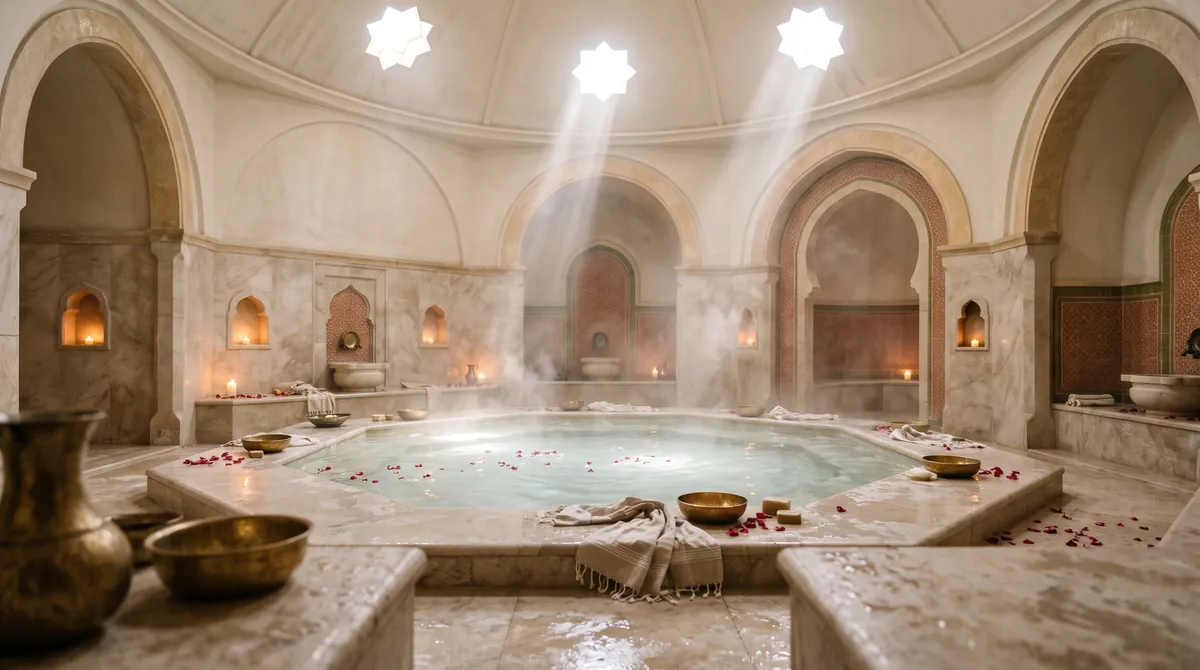
The hammam follows the Arab bath tradition: a warm room, a hot room and cold water, used in turns and slowly. In Granada and Córdoba the ritual has been revived in baths set in old houses, with horseshoe arches, tiles and lantern light. You usually book a time slot, bring swimwear and move between the pools at your own pace. In Granada the medieval Arab baths of the Albaicín survive as a monument you can visit, which makes a fine prelude to a bath of your own.
How to judge a spa before you book
- The size of the spa compared with the number of rooms. A small pool shared by a large hotel is crowded at five in the afternoon. Ask how many guests use it at once, or whether you book a time.
- Opening hours. Some spas close early in the evening or keep the morning for treatments only. Check that it is open on the day you arrive.
- Booking treatments. Treatments often have to be booked in advance, sometimes several days ahead at weekends and in high season. Book them when you book the room.
- The food. Light, seasonal cooking makes a retreat; a heavy dinner after a massage undoes it. Find out whether the menu is ordinary, gently healthy or a strict programme.
- The atmosphere. Is the spa a quiet zone? Are outside guests admitted? Are robes, slippers and the use of the pools included?
Choose the retreat by the feeling you want to take home, not by the length of the treatment menu.
Why three nights beat one
A short break of three nights often helps more than one. On the first day you are still travelling in your head. On the second the body begins to slow; you notice the light, the taste of the bread, the fact that you have not looked at the time. By the third, you sleep differently. One night is a treat, three nights are a rest, and the difference is larger than two extra nights suggest.
Resist the temptation to fill every hour. One treatment a day is plenty, with long gaps of water, walking and sleep in between. A simple rhythm helps:
- Day one: arrive in daylight, have a swim or a short session in the warm rooms, eat early and go to bed early.
- Day two: one treatment in the morning, a slow lunch, a walk, the pool again at dusk.
- Day three: nothing booked until the afternoon. Read, sleep, go back to the water.
- Departure morning: a last swim before breakfast, then travel home slowly.
Health and safety in the water
Talk to a doctor before intense treatments if you are pregnant or have heart or circulation problems, and tell the therapist about any condition before you begin. Thermal water is hot, so keep sessions short, drink plenty of water and stand up slowly, because many people feel light-headed when leaving a hot pool. Alcohol and hot water do not mix well, however tempting a glass of wine by the pool may sound.
In the south in summer, keep the hottest treatments for the morning or the evening, and spend the middle of the day in the shade. Remember too that water is precious in these landscapes: a short shower between sessions is part of the courtesy of the place, and the calm you came for includes the calm of the village around you.
Questions and answers
What is the difference between a spa hotel and a thermal spa?
A spa hotel offers treatments and pools with ordinary heated water. A thermal spa is built around a natural hot spring, and the mineral water itself is the reason to go, whether in the Italian terme, the Portuguese termas or the French spa towns.
Is thalassotherapy only a medical cure?
No. It grew from a medical tradition and still has one, but many centres on the French Atlantic coast offer short stays built around seawater pools, seaweed treatments and walks in the sea air. A long weekend is enough to feel the difference.
Do I need to book treatments in advance?
Usually yes, especially at weekends and in high season. Ask for times when you book the room, and keep the first evening free so you do not have to rush.
Can I use thermal pools when pregnant?
Talk to your doctor first. Hot water, saunas and intense treatments are not suitable for everyone, especially in pregnancy or with heart or circulation problems, and many spas ask about your health before treatments.
Further reading in our network
- resortrisLuxury resorts
Luxury resorts with spas, pools and gardens, for stays that are meant to be the whole holiday.
Our articles are general travel information written with care. Opening months, access and local rules change; check the details with your hotel before you travel.


