
A mas in Provence: stone houses, the mistral and long lunches
The old farmhouses of Provence were built to face the sun and turn their back on the wind. Stay in one and you soon learn the rhythm of the south: markets, shade and long lunches.
At noon the terrace is the only place to be. A plane tree spreads its shade over a long table, cicadas saw away in the heat, and the stone walls of the house behind you hold the cool of the night like a cellar. Somebody brings bread, a bowl of tapenade, a bottle of rosé beaded with cold. Nobody is in a hurry. The house was built for exactly this moment, facing the sun and turning its back on the north, and after a day or two you begin to live the way it asks you to.
A house built against the wind
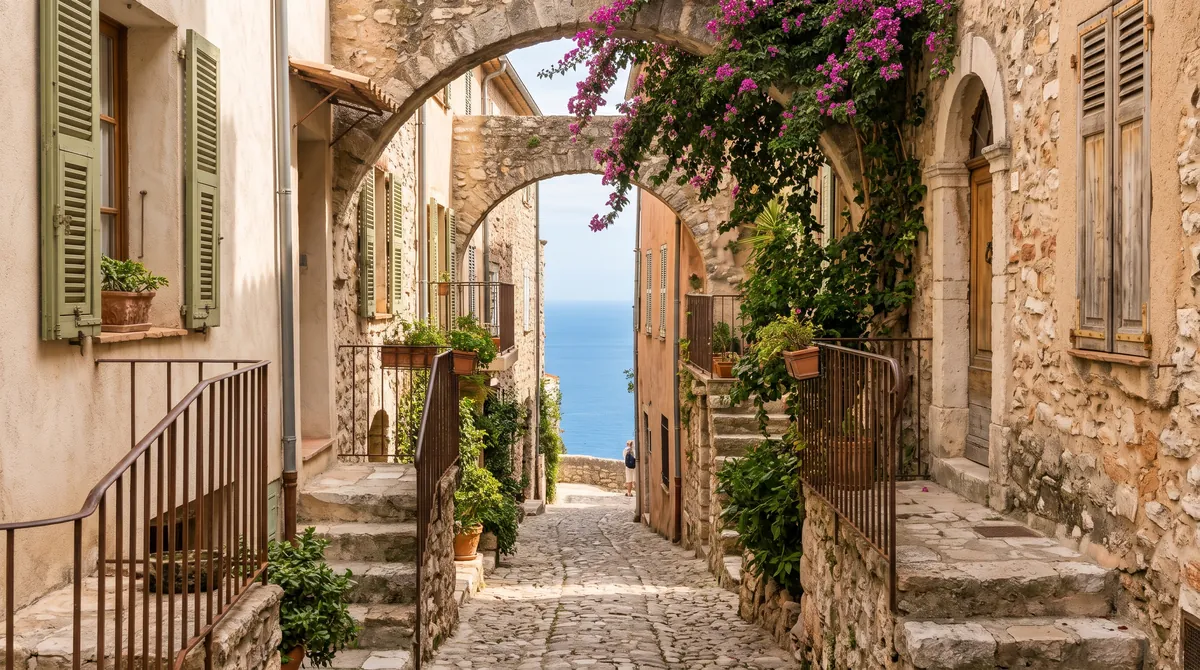
A mas is the traditional farmhouse of Provence: thick stone walls, a roof of curved terracotta tiles, a terrace under plane trees or a vine. Walk round to the north side and you will see the key to its design. The windows there are small and few, because that is where the mistral comes from, the cold north wind that can blow for several days at a time. The main rooms and the terrace face south, towards the light and the warmth.
Many old houses still have a line of cypresses or a tall hedge on the north side as a windbreak, with the entrance on the sheltered side. These details matter when you choose a place to stay. A sheltered terrace is worth more than a famous view on a day of mistral. An exposed one, however lovely in the photographs, may stand empty while the wind rattles the parasols.
A sheltered terrace is worth more than a famous view on a day of mistral.
Mas or bastide?
The other traditional house of the Provençal countryside is the bastide. Where a mas was a working farm, often extended room by room over generations, a bastide was the larger country house of a well-off family: more formal and more symmetrical, with tall windows, a gravel courtyard and gardens laid out with care. The difference shapes the stay.
- A mas feels rustic and intimate: low doorways, uneven floors, old beams, rooms that open straight onto the garden. Ideal for couples who want simplicity and a sense of the land.
- A bastide feels grander: high ceilings, stone staircases, avenues of trees, perhaps a fountain or a pool in a formal garden. Ideal if you enjoy a little ceremony and plenty of space.
- Both are now often guest houses, the chambres d’hôtes where the owners live on site, or small hotels with only a few rooms.
In a guest house you are staying in someone’s home. Breakfast is often shared, arrival times are agreed in advance, and the host is usually the best source of advice on markets, walks and where to eat. Small courtesies go a long way: close the gate behind you, keep voices low on the terrace late at night, and say when you will be out for dinner.
The Luberon, village by village
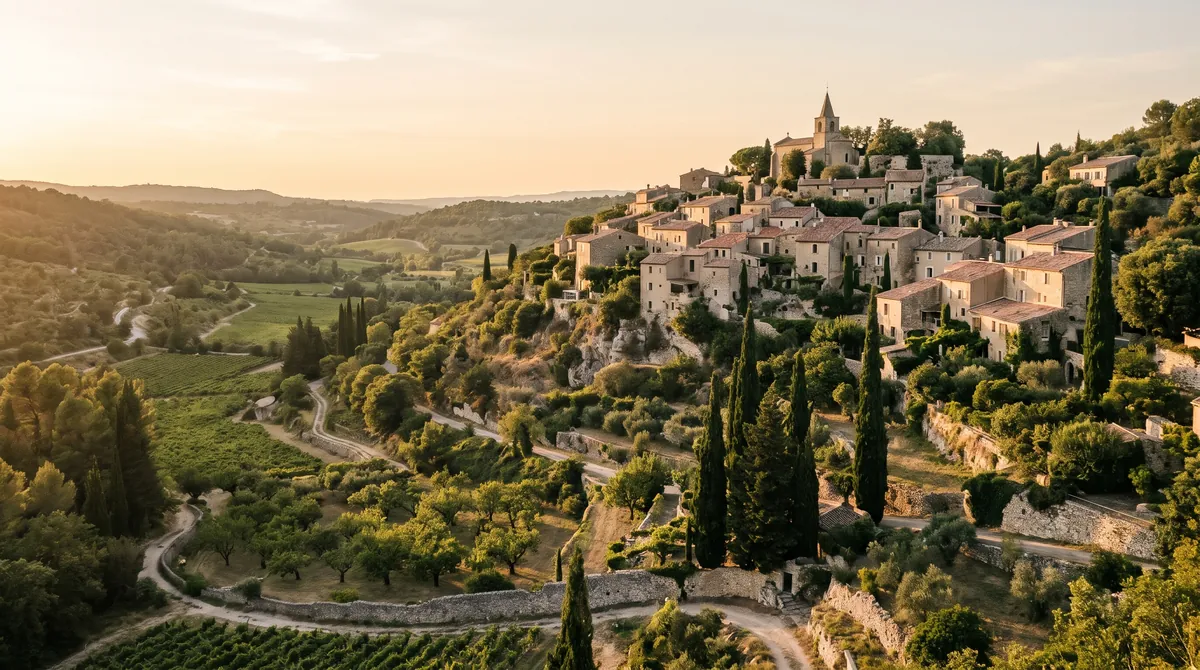
The Luberon, east of Avignon, is the classic landscape for a stay in a mas: limestone hills, vineyards, olive groves and oak woods, with villages set on rocky spurs above the valley. Each has its own colour and mood. Gordes rises in tiers of pale stone and is at its most beautiful seen from the road below in the evening. Roussillon is its opposite, a village of warm reds and oranges beside ochre cliffs that glow at sunset, with a path through the old quarries. Lourmarin, at the southern foot of the hills, has a Renaissance château and a relaxed square of cafés. Bonnieux and Ménerbes are quieter hilltop villages, lovely for a slow afternoon of lanes and views.
These villages are lived in, and many are small. Park at the edge, walk in, and remember in the evening that the shutters you pass belong to bedrooms. In summer, visit the best known ones early in the morning or after five in the afternoon, when the coaches have gone and the stone begins to cool.
Lavender: when and where
Lavender is the image everyone carries of Provence, and timing is everything. It usually blooms from late June to late July, and harvesting begins in July, so a field you saw in full colour one week may be cut the next. The plateau of Valensole has the wide, open fields of the postcards; the area around Sault, higher up beneath Mont Ventoux, has a wilder setting and often flowers a little later.
Go early in the morning or in the last hour before sunset, when the colour is deepest and the heat bearable. Keep to the edges and the paths. The fields are farmland and a livelihood, not a backdrop, and the bees working the flowers do not like to be disturbed.
Markets, wine and the long lunch
Almost every town in Provence has its market day, and planning your week around them is one of the pleasures of a stay. L’Isle-sur-la-Sorgue, a town of canals and old water wheels on the river Sorgue, is known for its Sunday market and its antiques. Arrive early, before the heat and the crowds, and ask your host for the market days in the villages nearby, since they change from place to place.
Buy olive oil, olives, tapenade, goat’s cheese, bread and fruit, and carry it all home for lunch on the terrace. Rosé from Provence is the natural companion on a hot day; for a red with more weight, Châteauneuf-du-Pape lies just north of Avignon. If you visit wine cellars, let one person drive or simply taste and spit, because country roads here are narrow and wind between stone walls.
The mistral and the seasons
The mistral is part of life here. It can arrive suddenly and blow hard for several days, slamming shutters, rattling tiles and turning a calm swimming pool into a sea of ripples. It also sweeps the sky clean, leaving a hard, bright blue and a clarity of light that painters have long loved. Pack a warm layer even in summer, and on a windy day choose sheltered villages and a table in the lee of a wall.
Summer is hot and busy, with crowded villages and full car parks in July and August. May to June and September are ideal: green hills and roses in early summer, the first lavender at the end of June, warm evenings outside and the grape harvest in September. In every season you will need a car, since the most appealing houses lie out among the fields, often at the end of a gravel track.
Questions and answers
What is the difference between a mas and a bastide?
A mas is the traditional farmhouse of Provence, built of stone with small windows on the north side against the mistral. A bastide is a larger, more formal country house that belonged to a well-off family, usually with gardens. Both are now often guest houses or small hotels.
When is the best time to see the lavender?
Lavender usually blooms from late June to late July, and harvesting begins in July. Aim for the end of June or the first part of July for the best chance of full fields on the Valensole plateau and around Sault.
What is the mistral?
The mistral is a cold north wind that sweeps down through Provence and can blow for several days. It brings clear skies but can feel chilly even in summer. A house with a sheltered terrace makes all the difference.
Do I need a car in the Luberon?
Yes. Villages such as Gordes, Roussillon, Lourmarin, Bonnieux and Ménerbes are spread across the hills, and most mas and bastides lie in the countryside between them. Park at the edge of the villages and walk in.
Further reading in our network
- vinorinaWine regions of Europe
Wine regions of Europe, with more on Provence rosé and the reds of the southern Rhône.
- LaxaryLuxury lifestyle
Luxury lifestyle, with style, travel and the finer things of the French south.
Our articles are general travel information written with care. Opening months, access and local rules change; check the details with your hotel before you travel.