
Above the Riviera: a night in Èze, Saint-Paul and the perched villages
By day the hill villages behind Nice belong to the visitors; by night, when the last bus has wound down to the coast, they belong to the few who stay. A guide to sleeping above the sea.
Around six in the evening the lanes begin to empty. The tour groups drift back down to their coaches, the shops pull in their racks of scarves and soaps, and the swallows take over the sky above the rooftops. Someone waters geraniums on a stone balcony. Far below, the sea turns from blue to silver to grey, and the lights of the coast come on one by one. If you are staying the night in a perched village, this is the moment you came for, and it belongs almost entirely to you.
Villages built to be hard to reach
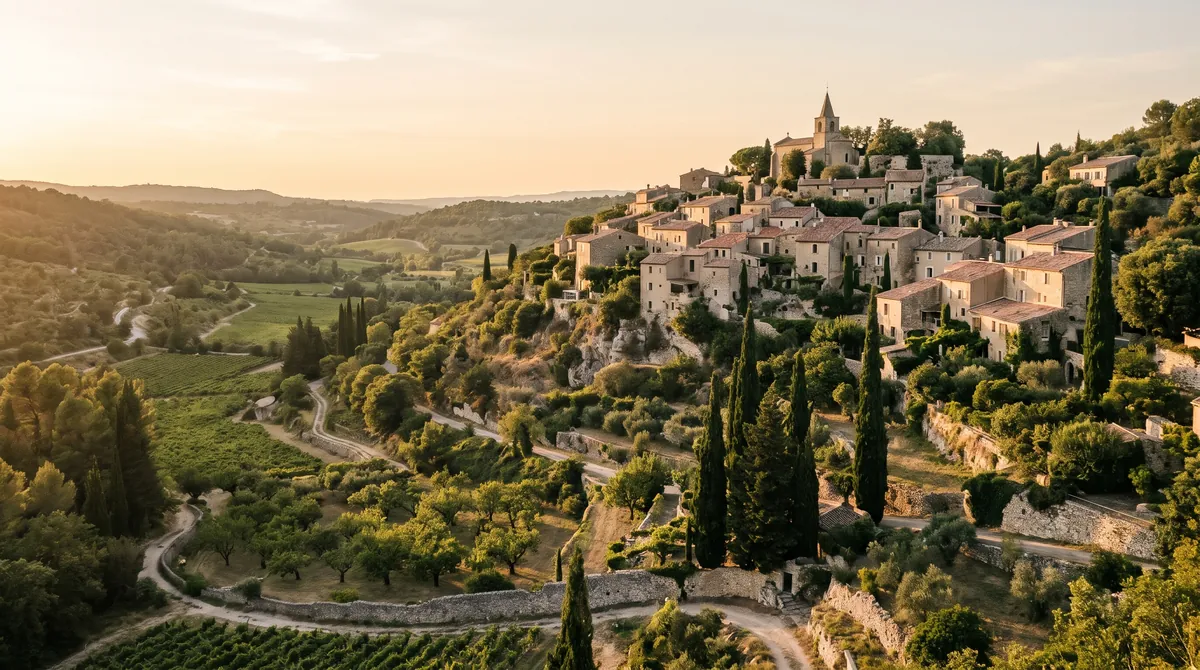
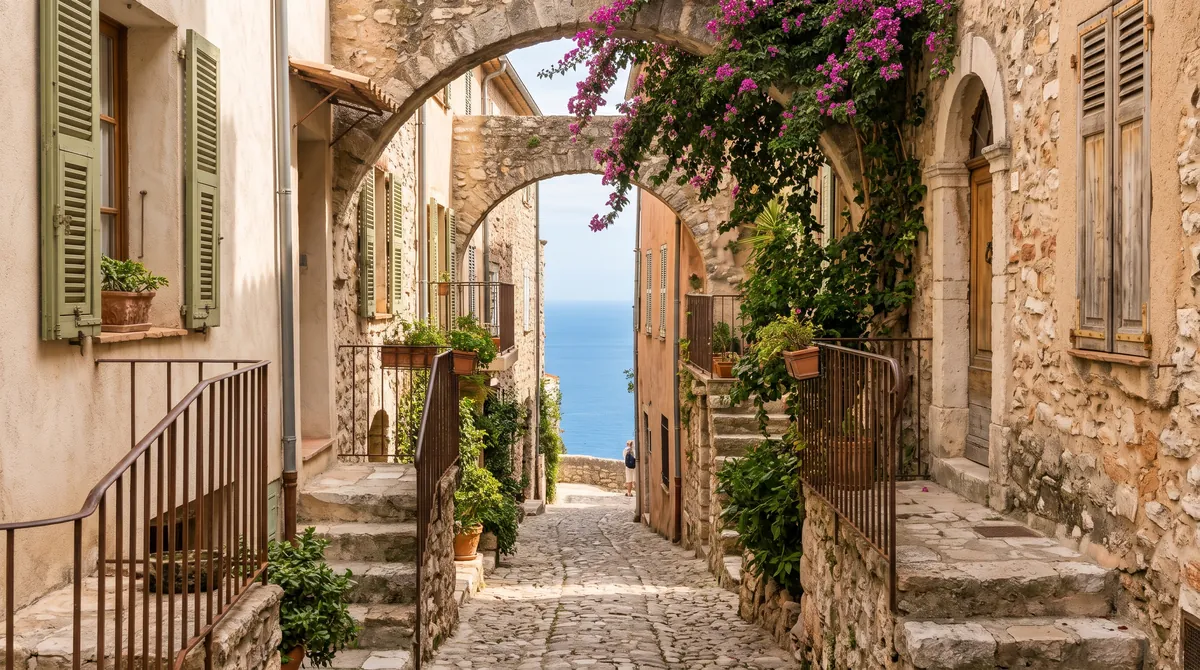
Behind the coast of the French Riviera, villages sit on hilltops and rocky spurs: the villages perchés. They were built for defence, high above the shore, and their shape still tells that story. Walls rise straight out of the rock, a gate or two lets you in, and inside the lanes are too narrow for a cart, with stone arches, covered passages and houses leaning together for strength. From almost every corner there is a glimpse of the sea, once a way of watching for danger and now simply the reason people come.
What made these villages safe is what makes them special to stay in. Cars stay outside. Lanes are steep and cobbled. Rooms in old village houses are often small, with thick walls and deep windows, but many open onto a terrace or a roof with a view that no seafront room can match. Small hotels and guest rooms here tend to be personal places, run by people who live in the village all year.
Èze, the eagle’s nest
Èze stands on a rock high above the sea between Nice and Monaco, roughly 400 metres above the water, and it is the most dramatic of the perched villages. Its lanes wind upwards in tight loops of stone to the summit, where an exotic garden of cacti and succulents grows among the ruins of the old castle, with a view along the coast in both directions. Below the rock, by the sea, lies Èze-sur-Mer with its railway station. A steep old path links the two, a climb of an hour or more that is best started early, with water and good shoes.
Èze fills quickly by mid morning in summer, which is exactly why a night there is worth it. A night in a perched village gives you the hours that day visitors never see. Walk the lanes after dinner, when the stone still holds the warmth of the day, and again at first light, before the first bus comes up the hill.
A night in a perched village gives you the hours that day visitors never see.
Saint-Paul-de-Vence and the hinterland
Saint-Paul-de-Vence, inland from Nice, is a fortified village whose ramparts still enclose its lanes of galleries and studios. Artists have loved it for a long time, and the painter Marc Chagall is buried in its small cemetery at the far end of the village, a quiet place with a view over the hills towards the sea. Visit it calmly, as you would any cemetery, and early, before the main street fills.
Vence, just beyond, is a real small town with markets, fountains and an old centre inside its walls, a good base if you prefer everyday life to a stage set. Tourrettes-sur-Loup, built along the edge of a cliff, is known for its violets, grown around the village. Higher still, Gourdon clings to the rim of the Loup gorge, a dizzying place to stand at sunset with the whole coast laid out below. Roads up here are narrow and winding; drive slowly and save the views for the lay-bys.
Down by the water: Villefranche and Menton
Not every special village sits on a hill. Villefranche-sur-Mer curves around a deep bay, one of the finest natural anchorages on this coast, with an old town of steep lanes and covered passages tumbling down to the water. It makes an easy, lovely base: trains stop here, the beach is a short walk away, and in the evening the small boats and the lights of the bay are your view.
Menton, the last town before the Italian border, has a gentler climate and a different character: Italianate façades in yellow and ochre, an old town climbing to a hilltop cemetery, and gardens full of plants from warmer lands. It is known above all for its lemons, which grow in the gardens and on the terraces around the town, and its seafront is made for slow evening walks.
Getting around without a car
This is one of the few corners of southern Europe where you can travel happily without a car. Coastal trains link the seaside towns, from Nice to Villefranche-sur-Mer, Èze-sur-Mer, Monaco and Menton, and in summer traffic they are often quicker than the road. Buses climb from the coast to the hill villages, among them Èze, Saint-Paul-de-Vence and Vence. Check the time of the last bus back before you set out for dinner, as the last one can leave earlier than you expect.
If you do drive, the three corniche roads run along the slopes at different heights above the sea: the lowest along the shore, the middle one past the village of Èze, the highest along the ridge. All three are beautiful, narrow and busy, with tight bends and few places to stop. Park outside the village, and expect to carry your luggage for the last stretch, which is reason enough to pack with care.
- A small suitcase or a soft bag you can carry up steps, since wheels are of little use on cobbles.
- Shoes with a good grip, as worn stone can be slippery, especially after rain.
- A light jacket for the evenings, which are cooler up the hill than on the coast.
- Swimwear and a towel in a day bag, for a train down to the sea.
- A torch, or your phone, for lanes that are only dimly lit at night.
When to go, and why to stay
Spring is the season for gardens, when the planting of Èze and Menton is at its best and the air is clear. Early autumn is the time for swimming, with the sea still warm and the coast calmer after the summer. July and August are crowded, especially in the best known villages, but even then the evenings are calmer once the day visitors have left. That is the simple secret of these places: arrive in the afternoon, stay the night, and see them at both ends of the day.
Questions and answers
Can I visit the perched villages without a car?
Yes. Coastal trains link Nice, Villefranche-sur-Mer, Èze-sur-Mer, Monaco and Menton, and buses climb to villages such as Èze, Saint-Paul-de-Vence and Vence. Check the time of the last bus before an evening out.
Is it worth staying overnight in Èze or Saint-Paul-de-Vence?
Yes, if you enjoy quiet. Both villages are busy with day visitors, especially in summer, but evenings and early mornings are calm once the crowds have gone, and that is when the lanes are at their most beautiful.
Are perched villages suitable for travellers with limited mobility?
They can be difficult. Lanes are steep, cobbled and often stepped, and cars must stay outside the village. A base in a seaside town, with a day trip up by bus, may be the easier choice.
Where is Marc Chagall buried?
The painter rests in the cemetery of Saint-Paul-de-Vence, the fortified village he loved. It is a quiet place with a view over the hills, so visit calmly and early in the day.
Further reading in our network
- LaxaryLuxury lifestyle
Luxury lifestyle, from style and design to travel and the finer things along the Côte d’Azur.
- trevisitShort trips and city breaks
Short trips and city breaks, with ideas for a few days in Nice and along the coast.
Our articles are general travel information written with care. Opening months, access and local rules change; check the details with your hotel before you travel.