
The Costa de la Luz: Atlantic light from Cádiz to Tarifa
Long beaches, pine woods, white towns on hills and a wind with a name of its own. A slow journey along the Atlantic coast of the province of Cádiz, and how to choose a place to stay.
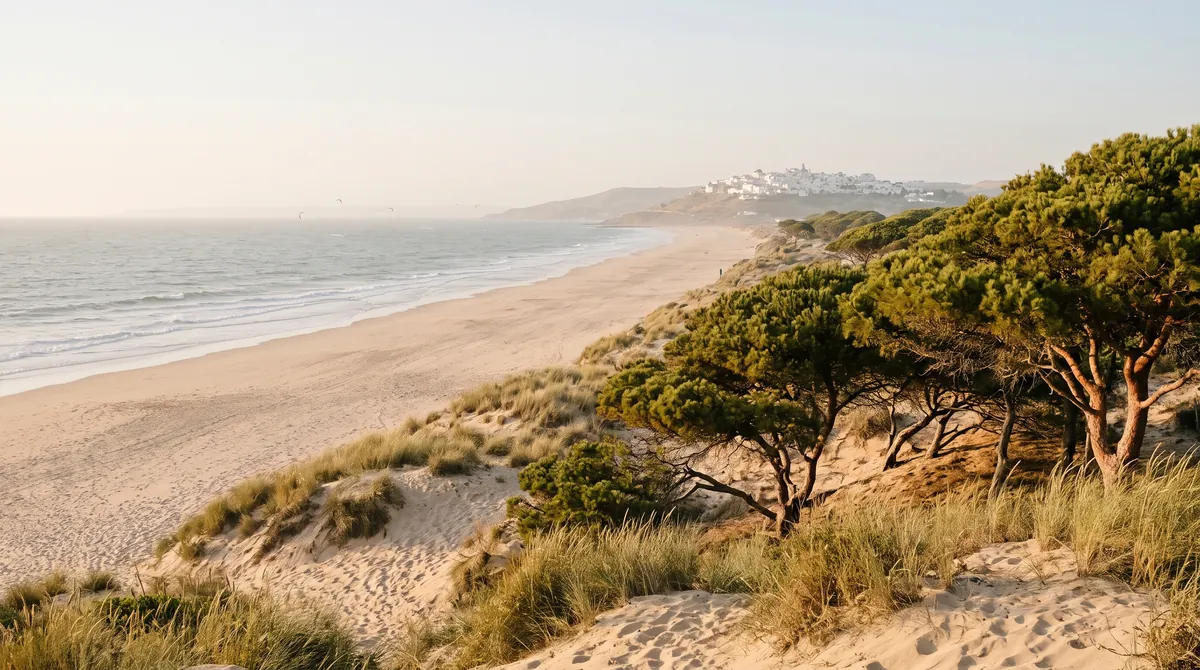
The light is the first thing you notice. It is softer than on the Mediterranean, silvery in the morning and long and golden in the evening, and it lies on the sand, the dunes and the white walls with a clarity that makes everything look freshly painted. A breeze moves the tops of the umbrella pines. The sea is a darker, colder blue than you expect, with long rolling waves, and the beach runs so far in both directions that the people at the end of it are only dots.
The Atlantic side of Andalusia
The Costa de la Luz is the Atlantic coast of Andalusia, running from the Portuguese border down to Tarifa. This journey follows its southern half, the province of Cádiz, where long sandy beaches, dunes and pine woods alternate with fishing towns and white villages on the hills. Compared with the Mediterranean coast it feels emptier and wilder. The water is cooler than the Mediterranean, the surf is livelier, and long stretches of shore are still backed by dunes and pines rather than buildings.
Small hotels here are often simple and luminous: white terraces with views of the sea, beach houses behind the dunes, rural stays among the pines a few kilometres from the shore. What they share is light and air rather than luxury in the usual sense, and the best of them make you want to spend the afternoon on a shaded terrace doing nothing at all.
Cádiz, the city in the sea
Cádiz is one of the oldest continuously inhabited cities in western Europe, and its walled old town sits on a narrow spit of land almost surrounded by the sea. You feel it everywhere. At the end of many streets there is a glimpse of water or sky, the air smells of salt, and the sunset over the beach of La Caleta, between two old forts, draws a crowd on every clear evening. The golden dome of the cathedral rises above the flat roofs, and the lanes are made for wandering without a map.
A night or two in the old town makes a good start or end to a coastal trip. Before Lent the city celebrates its famous carnival, known for witty, satirical songs, and the streets fill with costumes and music.
Down the coast: towns and beaches
From Cádiz the coast runs south and east towards the Strait, and the distances are short enough to make one or two bases easy.
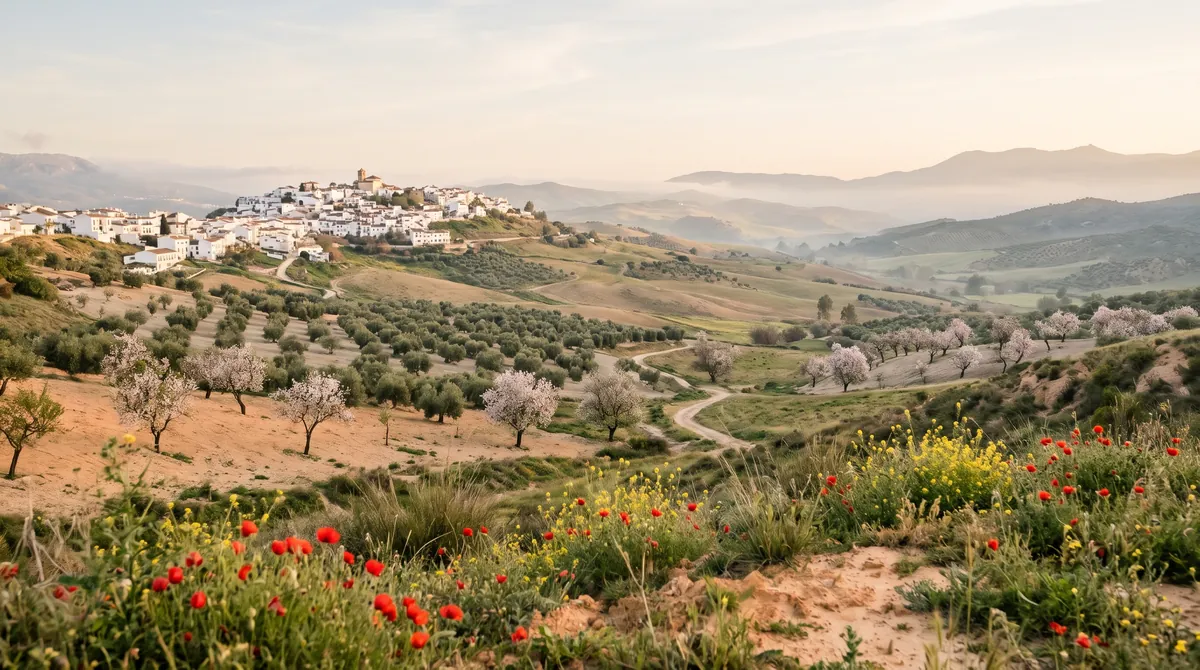
- Vejer de la Frontera. A white village on a hill a few kilometres inland, with steep lanes, flower-filled patios and views towards the sea. It is cooler and quieter than the beach towns at night, and a lovely base.
- Zahara de los Atunes and Barbate. Fishing towns known for the almadraba, the traditional tuna fishing with fixed nets in late spring. In season, tuna appears on menus all along the coast, raw, grilled or salt-cured.
- Bolonia. A small bay with the Roman ruins of Baelo Claudia beside the beach and a great dune rising above the sand. The Roman town lived from salting fish, and you can still see the stone tanks.
- Tarifa. The southernmost town of continental Europe, a centre for kitesurfing, with views of Africa across the Strait. The old town is compact and lively, and the beaches beyond it are wide and wind-swept.
Swimming on this coast deserves respect. Waves and currents can be strong, and conditions change with the wind. Swim where there are lifeguards in summer, follow the flags and never swim alone off an empty beach, however inviting it looks.
Living with the Levante
Every conversation on this coast eventually turns to the wind. The Levante, a strong easterly, can blow for days, warm and dry, sending sand across the beaches and whipping the sea into white horses. The Poniente from the west is calmer and cooler, bringing clear skies, fresher air and often the easier beach days. Kitesurfers love the strong days; everyone else learns to plan around them.
Every conversation on this coast eventually turns to the wind.
On a Levante day, think like a local. Walk through Baelo Claudia, explore the lanes of Vejer, spend a day in Cádiz, drive inland for a long lunch, or simply stay on a sheltered patio with a book. A good small hotel here has at least one terrace or courtyard protected from the wind, and it is worth asking about this before you book a beach stay.
The sherry triangle and Doñana
North of Cádiz lies the sherry triangle, formed by Jerez de la Frontera, El Puerto de Santa María and Sanlúcar de Barrameda. Here the wine ages in cool, high-ceilinged cellars, where sea breezes and a layer of yeast called flor give the dry wines their character. In Sanlúcar the local style is manzanilla, pale, dry and faintly salty, best drunk cold with the town’s famous langostinos, sweet prawns from the mouth of the Guadalquivir.
Doñana National Park lies across the river from Sanlúcar, a vast wilderness of marshes, dunes and pine woods and one of the most important wetlands in Europe for birds. From the riverside you look across to its empty shore, and guided visits and boat trips take you into the park, where access is controlled to protect it. Choose El Puerto or Sanlúcar as a base for a few days of cellars, seafood and river light, and remember that wine tastings and driving do not mix: take a taxi, or stay within walking distance.
When to go and what to book
Late spring and early autumn are the sweet spots: warm days, fewer visitors and long evenings on the terrace. Late spring is also the season of the almadraba, when the tuna pass along the coast. July and August are lively and busy, with Spanish families filling the beach towns, and the best small places are booked well ahead. In winter some beach hotels close, but Cádiz, Vejer and the sherry towns stay open and quietly lovely, with low sun and empty sand.
Questions and answers
Is the Costa de la Luz good for swimming?
Yes, with some care. The Atlantic is cooler than the Mediterranean, waves can be strong and currents change with the wind. Swim at beaches with lifeguards in summer and follow the flags.
What is the Levante wind?
The Levante is a strong easterly wind that can blow for days on this coast, especially around Tarifa. It drives sand across the beaches, so locals switch to sheltered spots, inland towns or sightseeing. The Poniente from the west is calmer and cooler.
Where should I stay on the Costa de la Luz?
It depends on the mood you want. Cádiz offers city life by the sea, Vejer a quiet white village with views, Zahara and Bolonia the beach, Tarifa wind and an active scene, and Sanlúcar or El Puerto sherry and seafood.
When is tuna season?
The almadraba, the traditional tuna fishing with fixed nets, takes place in late spring around Barbate and Zahara de los Atunes. Fresh tuna is then on menus all along the coast.
Further reading in our network
- andaluisTravel and sights in Andalusia
Travel and sights in Andalusia, from Seville and Granada to Ronda and the white villages.
- vinorinaWine regions of Europe
Wine regions of Europe, a good next read if the sherry towns have caught your curiosity.
Our articles are general travel information written with care. Opening months, access and local rules change; check the details with your hotel before you travel.