
Ronda and the white villages: a slow road through the hills
A bridge over a gorge, a village built under a rock, a castle above a turquoise lake. How to drive, walk and sleep your way through the pueblos blancos without hurrying.
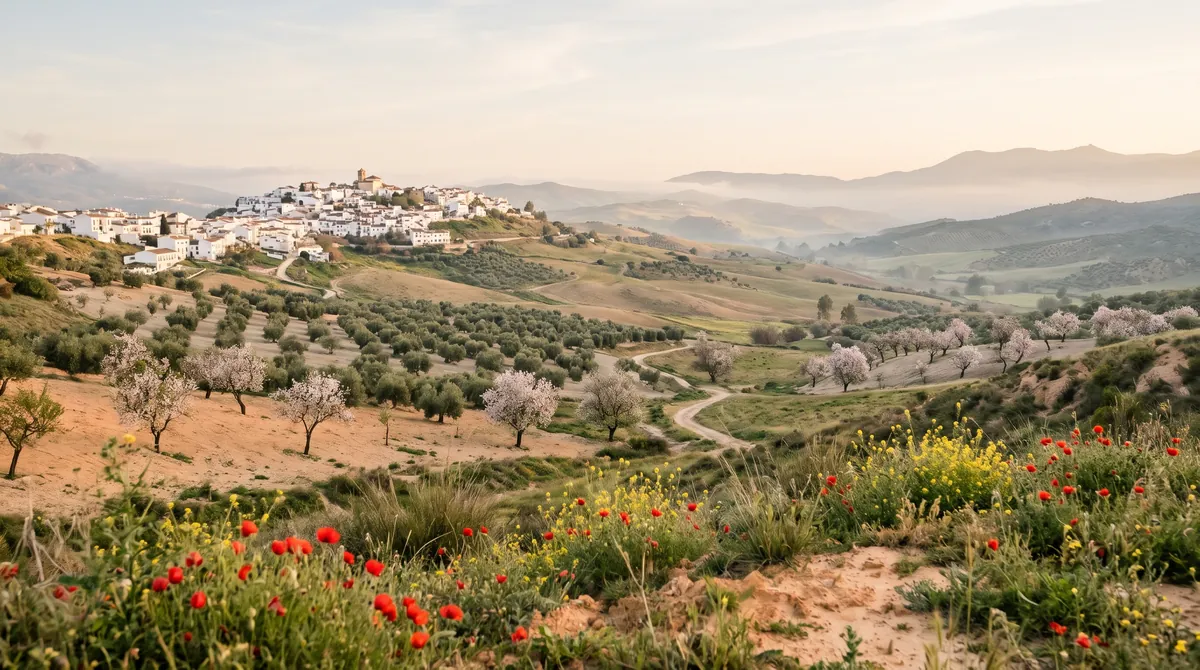
Morning in a white village begins with sound before light: a shutter pushed open, a moped climbing a lane, a church bell striking the hour. Then the sun comes over the ridge and the houses below you turn from grey to dazzling white, one terrace after another, down to the olive groves on the valley floor. By the time you have finished your coffee, a vulture is circling above the crags, and the only real question of the day is which village to drive to next.
The pueblos blancos
The pueblos blancos are the whitewashed hill villages of the provinces of Cádiz and Málaga. Most cling to ridges and rocky outcrops, with a castle or a church at the top and lanes that wind down in tight curves. The white is lime, renewed again and again, and it reflects the summer sun while keeping the houses cool inside. Several carry the words de la Frontera in their names, a reminder that this was once the frontier between Christian and Moorish kingdoms.
The best way to know them is slowly. Rather than ticking off six villages in a day, choose one or two bases and spend two or three nights in each. Small inns, village houses and converted mills make good bases, and from each you can reach several villages within an easy drive. Remember that village houses stand wall to wall and people rise early, so keep voices low in the lanes late at night.
The best way to know them is slowly.
Ronda, the town on the gorge
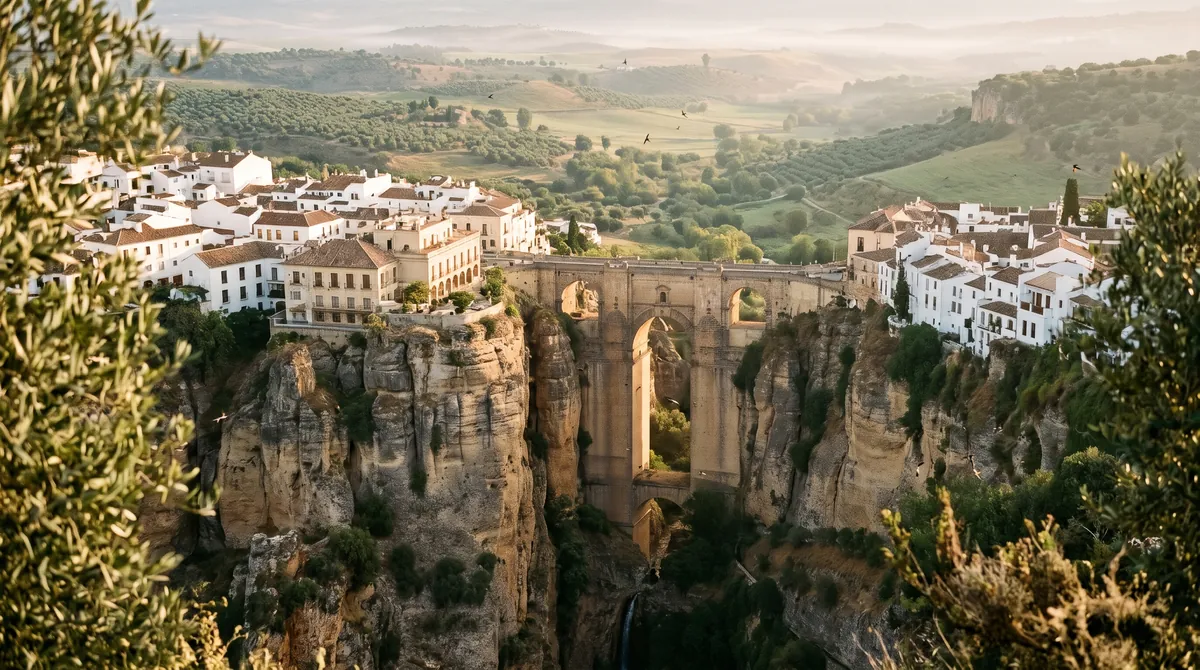
Ronda sits on both sides of the El Tajo gorge, which drops about 100 metres to the river below. The Puente Nuevo, completed in 1793, spans the gorge in tall arches of stone, linking the old town, with its Moorish origins, to the newer quarter. Stand on the bridge at dusk and look down: swifts dive into the gorge, the river is a pale thread far below, and the plain beyond slowly turns violet.
Ronda also has one of the oldest bullrings in Spain, and its old town, with mansions, walls and Arab baths, rewards an unhurried morning. Many day visitors arrive from the coast around midday, so the town is quietest early and late. That is the strongest argument for sleeping here: at sunrise you have the bridge and the viewpoints almost to yourself.
A loop through the villages
There is no single correct route, but this loop links some of the most distinctive villages with short drives and plenty of time on foot.
- Setenil de las Bodegas. Here the houses are built into and under the overhanging rock, so some streets run beneath a stone ceiling. Walk the lanes along the river, where bars sit in the shade of the cliff.
- Olvera. The castle and the church crown the hilltop and can be seen from far across the olive groves. Climb to the castle for the view over the rolling countryside.
- Zahara de la Sierra. A white village under a castle, above a turquoise reservoir. On a bright day the colour of the water looks almost unreal against the pale rock.
- Grazalema. The village lies in the Sierra de Grazalema natural park, among limestone peaks. The road from Zahara climbs over a high mountain pass with long views, so drive it slowly.
- Arcos de la Frontera. Set on a cliff above the river, it is a fine place to end the loop at sunset, with the plain towards Jerez glowing below.
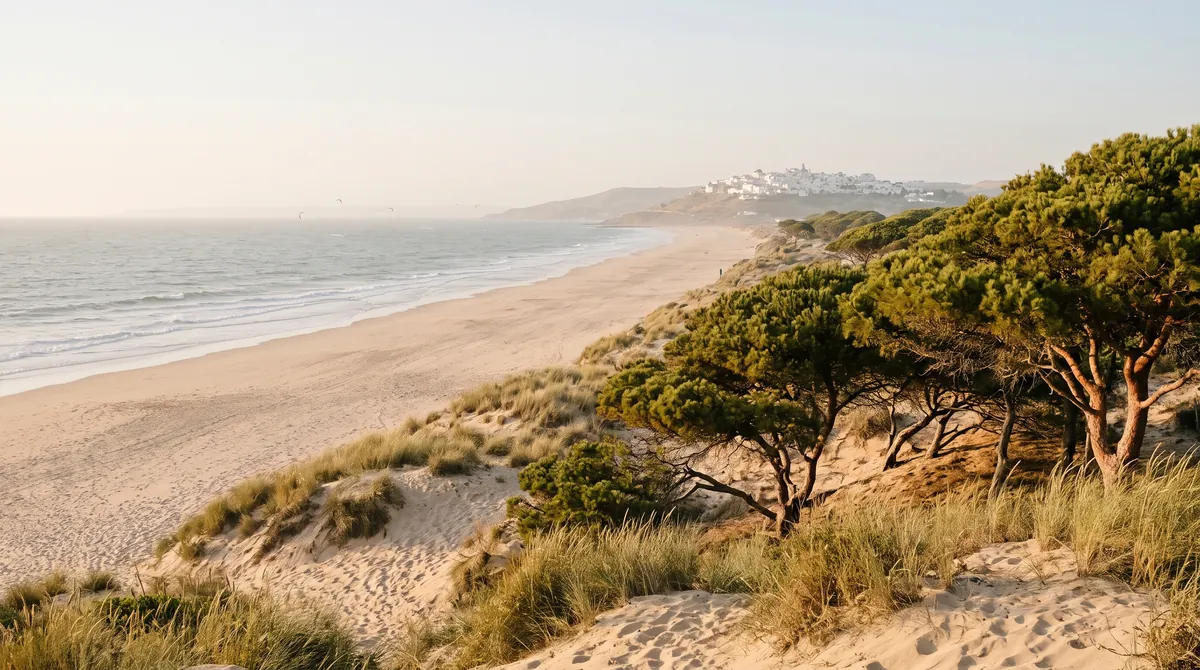
- Vejer de la Frontera. If you have time, continue to this white village near the coast, where the hills give way to the Atlantic.
Grazalema and the Spanish fir
The Sierra de Grazalema is known as one of the rainiest places in Spain. Weather from the Atlantic catches on the peaks and falls on the woods, which is why the valleys here are greener than you expect in the south. The rain also explains one of the park’s treasures: forests of Spanish fir, the pinsapo, a rare tree that grows wild in only a few mountain ranges of southern Spain and northern Morocco. Its dark, dense crowns look almost alpine on the limestone slopes.
Hiking trails link the villages and climb into the woods. Spring is the finest time to walk them, when wildflowers cover the meadows and the streams are full, while autumn brings warm colours and cooler air. Some trails in the protected areas of the park may need a permit at certain times of year, so check before you set out, carry water, and turn back if cloud comes down over the ridges.
Driving the hills without stress
The roads between the white villages are a pleasure to drive, as long as you give them time.
- Mountain roads take longer than maps suggest. Bends, climbs and the occasional tractor add a good deal to any journey time.
- Park outside the centre and walk. Village lanes are narrow and steep, often one way, and many were never built for cars. Look for parking at the edge of the village.
- Never drink and drive. Wine at lunch is part of village life, but mountain roads and alcohol do not mix. Let one person stay sober, or walk to dinner.
- Drive in daylight where you can, especially on unfamiliar passes. Goats, sheep and fallen stones can appear around any bend.
- Fill the tank before longer stretches, as petrol stations are fewer in the hills.
What to eat in the hills
Mountain food is honest and filling. Look for goat’s cheese from the hill farms, mild when fresh and sharp when aged, sometimes rubbed with olive oil or paprika. Game appears on menus in the cooler months, in stews of partridge, rabbit or venison, and mountain lamb is roasted slowly or cooked with garlic and wine. To finish, there are almond sweets, many with roots in the Moorish past, sometimes made by nuns and sold through a revolving hatch in the convent wall.
Lunch is the main meal in the villages and is eaten late, often from two in the afternoon. Many village kitchens close between lunch and dinner, so if you arrive hungry at five you may only find tapas at the bar, which in the hills is no hardship at all.
When to come, and how long to stay
Spring is the classic season, with wildflowers along the verges, green hills and comfortable walking. Autumn is quieter, with warm afternoons, cool nights and the changing colours of the woods. Summer is hot in the valleys, though the high villages are fresher in the evening. Winter can bring cold, wet days in the Sierra de Grazalema, but also clear, bright ones with smoke curling from every chimney. Three to five nights, split between Ronda and one smaller village, make a good first trip.
Questions and answers
How many days do I need for Ronda and the white villages?
Three to five nights is a good first trip. Split them between Ronda and a smaller village such as Grazalema or Zahara de la Sierra, so that you drive short distances and can walk in the evenings.
Is it difficult to drive to the white villages?
The roads are good but winding, and mountain routes take longer than maps suggest. Inside the villages the lanes are narrow and steep, so it is best to park at the edge and walk.
When is the best time to visit the white villages?
Spring for wildflowers and walking, autumn for quieter roads and warm colours. Summer is hot in the valleys, and winter in the Sierra de Grazalema can be wet and cold.
Can I walk between the villages?
Yes, hiking trails link several villages and climb into the natural park. Some trails in protected areas may need a permit at certain times of year, so check locally before you go.
Further reading in our network
- andaluisTravel and sights in Andalusia
Travel and sights in Andalusia, with Ronda, the white villages, Seville and Granada.
- Costa del SolCoast and lifestyle
Coast and lifestyle on the Costa del Sol, the natural starting point for a drive up into the hills.
Our articles are general travel information written with care. Opening months, access and local rules change; check the details with your hotel before you travel.