
Finca hotels in Mallorca: stone, olives and silence
Old farm estates of honey-coloured stone have become some of the island’s calmest places to sleep. How to read the categories, the landscapes and the small print before you book.
The gravel gives way to a dirt track, the track to a gate between two stone pillars, and then the engine is the loudest thing for a kilometre in any direction. You switch it off. A dog barks once behind a carob tree, sheep bells answer from a terrace, and the house appears: long and low, the colour of toasted bread, with green shutters half closed against the afternoon. This is the moment most guests remember from a finca stay in Mallorca, the instant the busy coast feels very far away.
Finca, possessió, agroturismo: reading the words
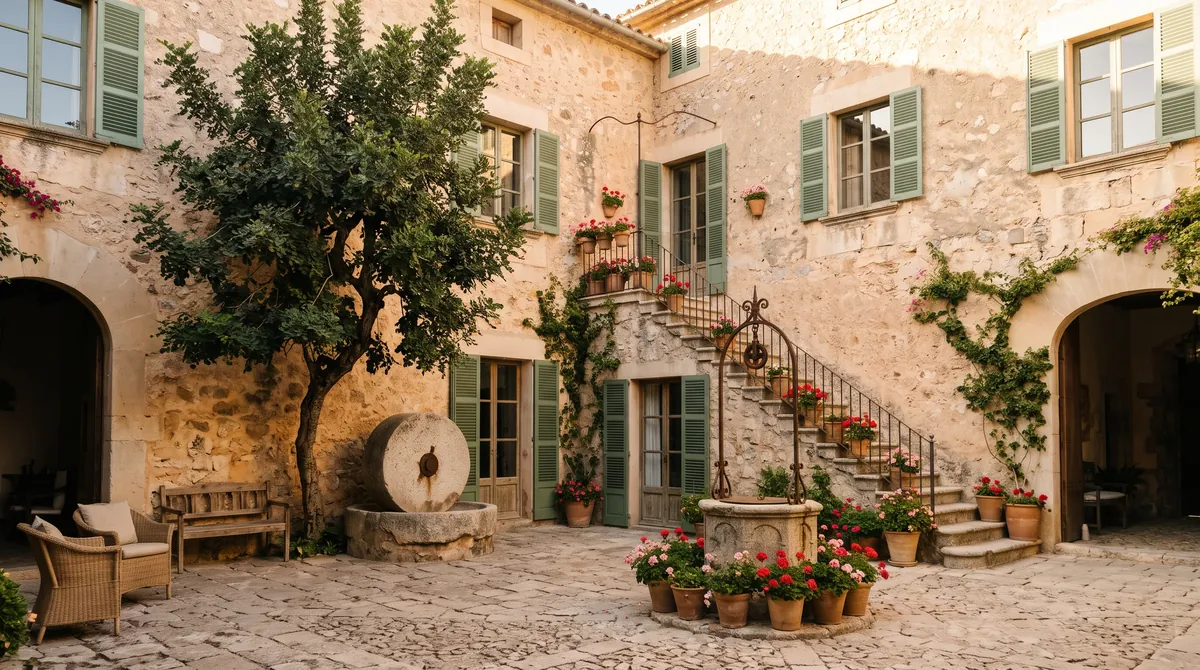
On Mallorca, finca simply means a country property, anything from a modest farmhouse to a large estate. A possessió is grander: a historic rural estate that once worked like a small village, with a manor house, a chapel, an olive press and farm buildings gathered around a courtyard. Many of the most atmospheric rural stays on the island occupy one of these, and the old working life is still written into the architecture, from the wide entrance arch to the stone troughs and the press room with its heavy beam or millstone.
Two official categories help when you search. Agroturismo is rural accommodation on a working farm, so you may wake to a tractor, share the track with a flock of sheep and find the farm’s own oil or oranges at breakfast. Hotel rural is the category for historic rural buildings converted into hotels, where the emphasis lies on the house and its setting rather than on farming. Neither label tells you much about comfort or style, so read how each place describes itself, and look as closely at the photographs of the bedrooms as at those of the pool.
Stone, shutters and thick walls
The material that gives these houses their warmth is marès, a local sandstone with a honey tone that turns almost pink in the last light of the day. It is soft enough to carve, so you find it in door frames, window surrounds and the curve of arches, and it weathers to a gentle, slightly sandy texture that is pleasant under the hand. Walls are thick, often half a metre or more, which keeps rooms cool at noon in July and holds a little warmth on a February evening. The green wooden shutters are not decoration: closed in the heat of the day and opened in the evening, they are still the best air conditioning the island has.
Outside, the land is shaped by dry stone walls and terraces, built without mortar to hold soil on slopes and to divide fields. The art of dry stone walling has been on the UNESCO list of intangible cultural heritage since 2018, in a joint listing of several countries including Spain. On a walk around almost any estate you will follow these walls, and it is worth stopping to see how each stone locks into its neighbours. Never climb on them or take a stone as a souvenir: one loosened stone can be the start of a collapse after heavy rain.
Plain or hills: choosing your landscape
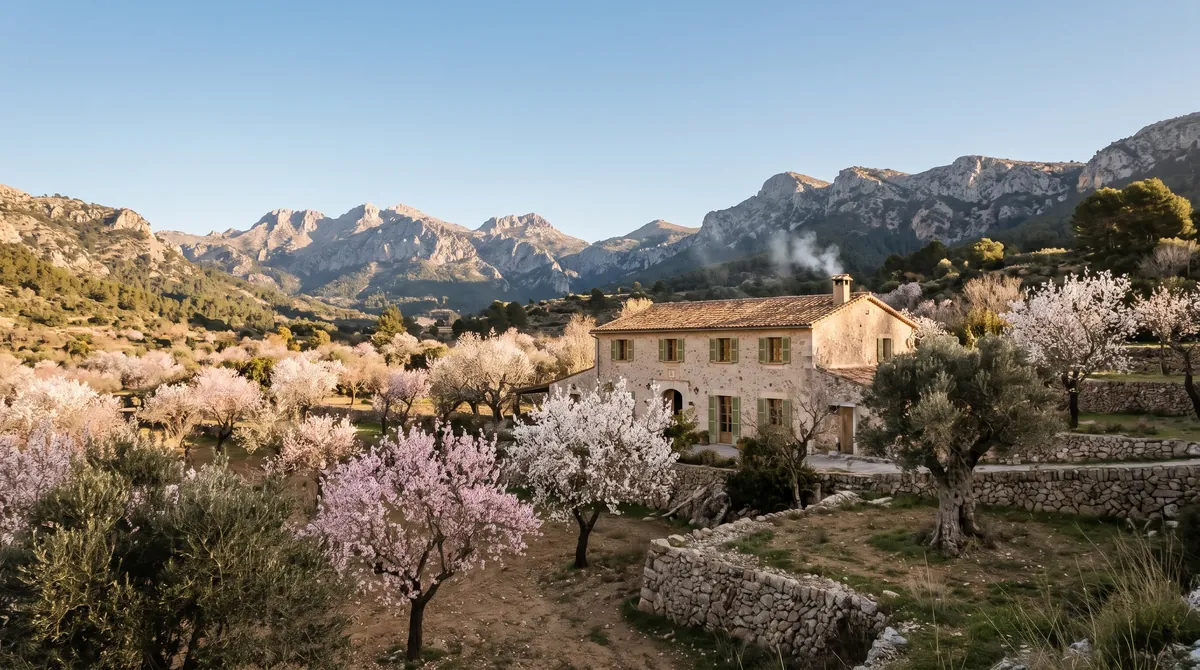
Where the estate lies changes the whole character of the stay. The central plain, Es Pla, is gentle farming country with almond and carob trees, old windmills and small towns whose church towers rise above the fields. It is the most central base for exploring, and the light here is wide and open. Around Pollença and Artà, the land folds into hills of pine and wild olive, and estates feel more enclosed and wooded. In the Tramuntana mountains, terraces climb steeply above the sea, roads narrow and nights turn cooler.
- Es Pla: central, flat and easy to drive, with almond blossom from late January to February and market towns all around.
- Pollença and Artà: rolling hills, woods and stone villages, with the beaches of the north and east within reach.
- The Tramuntana: mountain views and walks from the door, but slower, winding roads to everywhere else.
Life on the estate
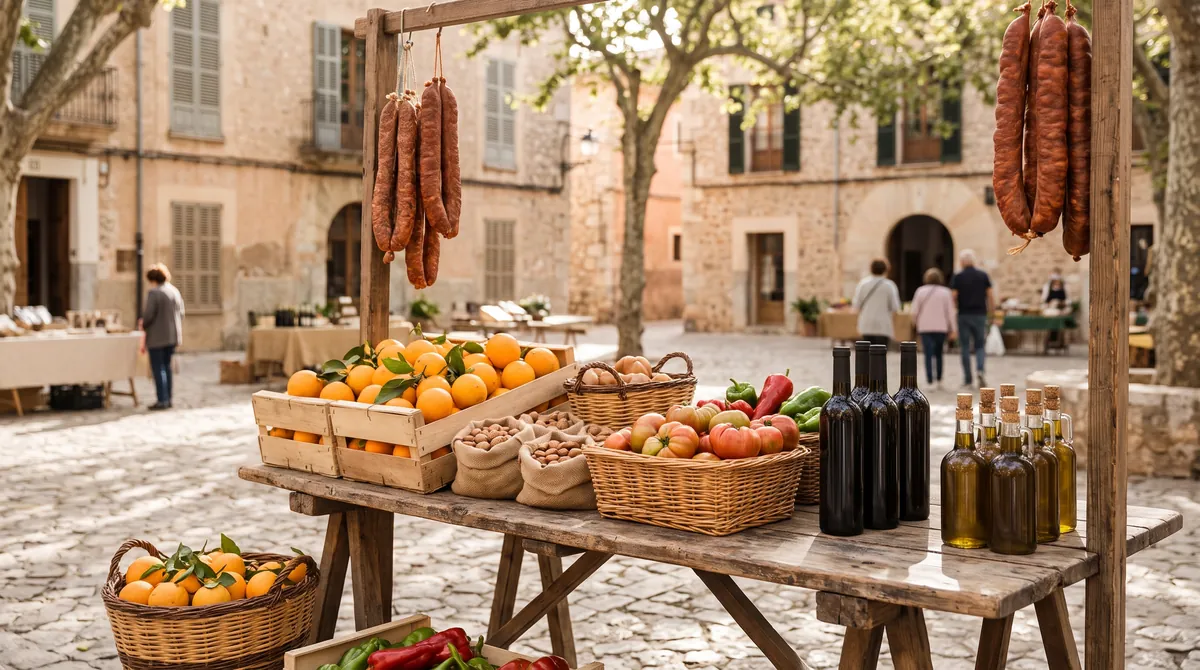
The rhythm of a finca day is simple, and that is the point. Breakfast is long and local: oranges squeezed that morning, bread with the island’s olive oil, a slice of sobrassada, the soft paprika sausage, and an ensaïmada, the spiral pastry dusted with sugar. Lunch is often taken in a village, and the afternoon belongs to the pool, the shade of a carob tree and a book. In the evening, swallows and later bats circle the courtyard, and the silence after dark can feel almost startling if you come from a city.
On a working farm, that silence comes with honest country sounds: a cockerel before sunrise, sheep bells, the hum of an irrigation pump. Most guests grow fond of them, but light sleepers should pack earplugs and ask for a room away from the farmyard. In summer, dusk also brings mosquitoes, so it is worth asking whether the windows have screens.
The green wooden shutters are not decoration: closed in the heat of the day and opened in the evening, they are still the best air conditioning the island has.
Getting there and getting around
A car is usually needed. Buses link the larger towns, but estates sit at the end of tracks that no bus will ever see, and calling a taxi to a remote gate can take a while. Choose a small car: lanes between stone walls are narrow, village streets narrower still, and a compact model makes parking in a market town far less stressful. Arrive in daylight the first time, because rural tracks are rarely lit and signs at the gate can be modest. Save the location on your phone before you set off, since the signal can fade in the hills.
Questions to ask before you book
- How far is the sea? Some estates are 15 minutes from a beach, others nearer an hour. Decide whether you want the sea every day or a pool with the odd trip to the coast.
- Is the farm still working? A working estate means produce, animals and real rural life; a converted one is usually quieter and more polished.
- Which months is it open? Some rural houses close for part of the year, others welcome guests in every season.
- When does the pool open, and is it heated? In spring the water can be bracing.
- Where are the rooms? Rooms in the old farm buildings around the courtyard feel quite different from those in the manor house itself.
When to go
Spring and autumn are the gentlest seasons for a country stay, with green fields, wild flowers and warm afternoons. Summer is hot inland, and a pool and a shaded terrace matter more than anything else on the list. Late January to February brings the almond blossom, when the plain turns white and pale pink, and a finca with a fireplace makes a lovely base. Whatever the season, give yourself at least three nights: the first day goes on arriving, and the real quiet only settles on the second morning.
Questions and answers
What is the difference between an agroturismo and a hotel rural?
An agroturismo is an official category for stays on a working farm, so farm life and home produce are part of the experience. A hotel rural is a historic rural building converted into a hotel, where the building matters more than the farming. Both can be simple or very comfortable.
Can I stay in a finca without a car?
It is possible but limiting. Most estates lie down private tracks far from bus routes, so you would depend on taxis or transfers. If you prefer not to drive, choose a place on the edge of a village with shops and a restaurant within walking distance.
Are finca hotels a good choice in winter?
Many are, provided the house is open and heated. Thick walls keep rooms cool in summer but can feel chilly in January, so ask about heating and fireplaces. The almond blossom from late January makes it a lovely time to be on the plain.
Will I be close to the beach?
That depends entirely on the estate. Mallorca is not large, but country roads are slow, so ask for a realistic driving time to the nearest beach rather than a distance in kilometres.
Further reading in our network
- island mallorcaThe island atlas
The island atlas of Mallorca, with villages, beaches and walks to plan the days around a country stay.
Our articles are general travel information written with care. Opening months, access and local rules change; check the details with your hotel before you travel.