
Wine estates and market mornings: tasting Mallorca
Two wine regions, native grapes, island olive oil and a market town that has traded on the same weekday for centuries. How to taste Mallorca slowly, and where to stay to do it well.
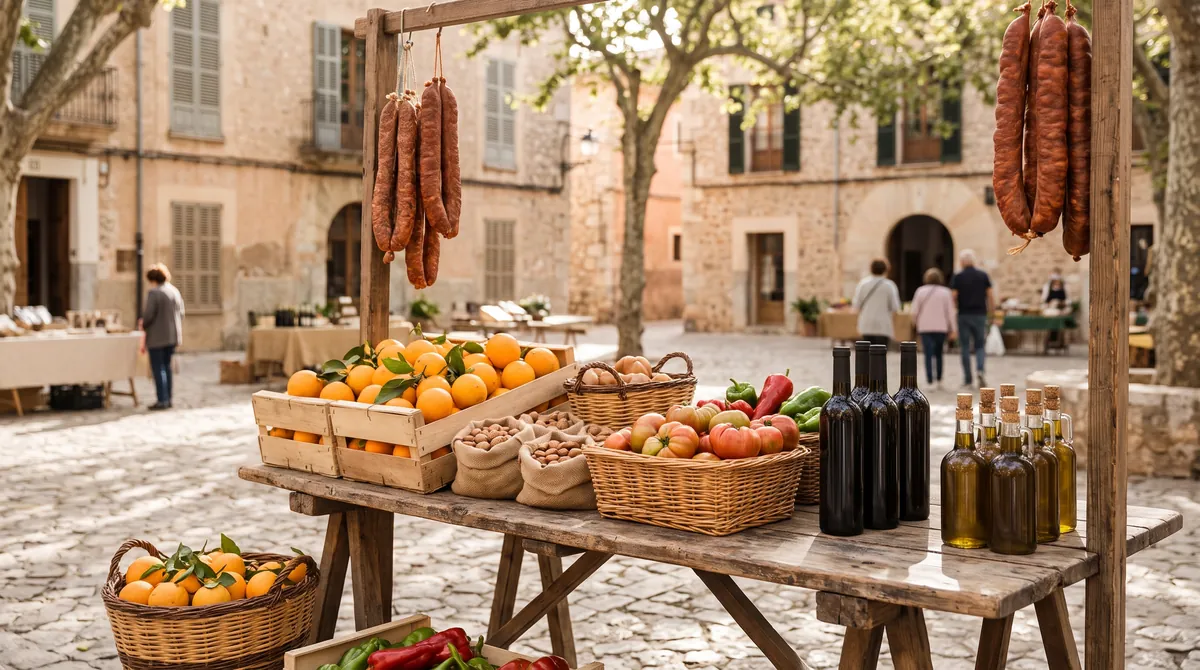
By half past eight the streets of Sineu are already full. Farmers unload crates of oranges and greens, a stall hangs rows of sobrassada, the soft cured sausage with paprika, and the first shoppers move slowly between the stalls with baskets on their arms. The smell of coffee drifts out of the bars near the church. It is Wednesday, market day here for about seven centuries, and this square is the right place to begin tasting Mallorca, before the heat rises and the coaches arrive.
Two wine regions and their native grapes
Mallorca has two designations of origin for wine. Binissalem lies in the centre of the island, around the town of the same name and its neighbours at the foot of the mountains, which shelter the vines from the north. Pla i Llevant covers the plain and the east, a warmer, more open landscape. Many fine wines also carry the label Vi de la Terra Mallorca, which gives winemakers more freedom with grapes and blends.
What makes the island’s wines distinctive are the native grapes. Manto Negro and Callet are the local red varieties, often giving reds that are paler in colour than their warmth suggests, with soft red fruit and a hint of spice and wild herbs. Prensal Blanc is the native white, fresh and gently fruity. Many estates blend them with international grapes, but it is worth asking specifically for the local ones: they are the taste of the place.
Visiting a winery
Many wineries welcome visitors for tastings, from old family estates with stone cellars to modern buildings among the vines. Book ahead: tastings are often by appointment, especially outside the main season, and a small estate may simply have nobody free if you turn up unannounced. A visit usually includes a walk through the vines or the cellar and a few wines with bread, olive oil and perhaps some cheese.
- Choose one region per day. Two or three visits in one area are far more relaxed than crossing the island between appointments.
- Book by appointment and confirm the time the day before.
- Decide who drives before the first glass, or book a driver or taxi for the day.
- Eat in between. A village lunch of island dishes is part of the experience, not a break from it.
- Pack bottles carefully: wrap them in clothes in your suitcase, or ask whether the estate can send them home.
Olive oil and island salt
Mallorca’s olive oil has its own designation, Oli de Mallorca, and on the island you will taste it on almost everything. Old olive trees with twisted trunks grow on the terraces of the mountains and in groves across the plain, and some estates press their own oil. Taste it the local way, on bread, and notice how it ranges from mild and soft to green and peppery. The other essential seasoning comes from the south: salt from the salt flats of Es Trenc, including fine flakes that are scattered over tomatoes or fish just before serving.
Market mornings
The weekly market in Sineu, on Wednesdays, goes back to a royal privilege of the early fourteenth century and remains one of the most traditional on the island, a mix of produce, local food, household goods and crafts in the streets around the church. Inca, a larger town in the centre with a long tradition of leather making, holds its market on Thursdays. On other days of the week, smaller village markets take turns across the island, so ask your host which one is closest.
Go early. The best produce, the coolest hours and the most local atmosphere all belong to the first part of the morning; by late morning the crowds are thicker and the light harsher. Bring a bag, small change and patience for parking, and buy fruit, olives, almonds and cheese for a picnic or for your room.
What to eat
- Pa amb oli: bread rubbed with tomato and drizzled with olive oil, with toppings such as cheese or ham. Simple and perfect at lunch.
- Tumbet: layers of vegetables such as aubergine, potato and peppers, baked with tomato sauce.
- Sobrassada: spread on bread, or warmed and drizzled with honey.
- Ensaïmada: the spiral pastry for breakfast, plain or filled.
- Frit mallorquí: a hearty fry of lamb or pork with potatoes, peppers and fennel.
Let the local grapes meet the local food. A chilled glass of Prensal Blanc suits fish, tumbet and a plate of pa amb oli on a hot day, while the softer reds of Manto Negro and Callet stand up well to sobrassada and frit mallorquí. Ask for wine from the island rather than the house default, and you may well be poured something grown a few kilometres away.
In a village bar, order a few dishes to share with a glass of local wine, and ask what is in season. Lunch is the main meal and runs late; do not expect a full menu at six in the evening, when many kitchens are resting before dinner.
Staying on a wine or olive estate
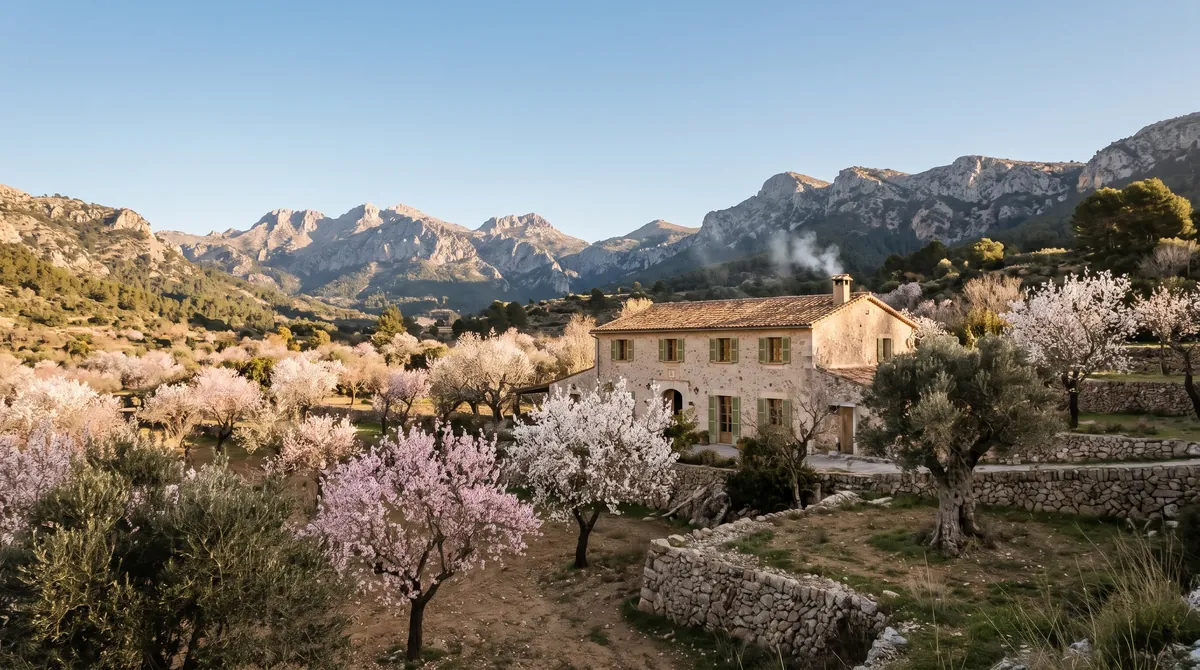
The most rewarding way to taste Mallorca is to sleep where the food is made. A stay on a wine or olive estate puts the vines or the old trees outside your window, oil from the estate on the breakfast table and often a tasting room a few steps away. In late summer and early autumn you may see the grape harvest; later in autumn the olives are picked, and the air around the press smells green and slightly bitter. Ask whether the estate offers tastings to guests, whether you can walk among the vines, and whether dinner is served on site so that nobody has to drive after the wine.
The most rewarding way to taste Mallorca is to sleep where the food is made.
Driving, drinking and mountain roads
One rule needs no discussion: never drink and drive, and above all not on the mountain roads, where bends are tight, verges are narrow and cyclists appear without warning. If you are the driver, spit at tastings, which is perfectly normal and respected, or book a driver for the day. Plan the route so that the last tasting ends near where you are staying, and keep the evening wine for dinner close to your bed.
Questions and answers
Do I need to book a wine tasting in Mallorca?
Usually, yes. Many wineries welcome visitors but offer tastings by appointment, especially small family estates. Book a day or two ahead and confirm the time.
Which market in Mallorca is the most traditional?
Sineu on Wednesdays, with a history going back to a royal privilege of the early fourteenth century. Inca on Thursdays is larger. Go early for the best produce and the calmest atmosphere.
What are Mallorca’s native grape varieties?
The main native red grapes are Manto Negro and Callet, and the native white is Prensal Blanc. Look for them on labels from Binissalem, Pla i Llevant and Vi de la Terra Mallorca.
What should I eat in Mallorca?
Start with pa amb oli, bread with olive oil, tomato and toppings. Then try tumbet, sobrassada and frit mallorquí, with an ensaïmada for breakfast and a glass of local wine at lunch.
Further reading in our network
- island mallorcaThe island atlas
The island atlas of Mallorca, with the villages, market towns and countryside around the vineyards.
- vinorinaWine regions of Europe
Wine regions of Europe, with more on grapes, estates and tasting across the continent.
Our articles are general travel information written with care. Opening months, access and local rules change; check the details with your hotel before you travel.