
Mallorca in winter: almond blossom, walking and open fires
When the beach hotels close, Mallorca becomes an island of walkers, market mornings and long lunches by the fire. How to plan a winter stay that is open, warm and quietly beautiful.
The fire is already lit when you come back from the walk, and the stone room smells faintly of wood smoke. Outside, the light fades early over the terraces, the air is sharp, and somewhere down the valley a dog barks at nothing. You walked for five hours today and met three other people. This is Mallorca in winter, an island many visitors never see: mild, green and unhurried, and at its most generous to those who come for quiet.
First, check the opening months
The first rule of a winter stay is practical. Many seaside hotels close from about November to March, while city hotels, rural hotels and some mountain houses stay open, so check opening months before you fall for a photograph. Then look for places built for the season: heating that really works, a fireplace in the sitting room or even the bedroom, and thick walls that hold the warmth. A summer house with tiled floors and no heating can feel cold on a January night, however blue the sky was at noon.
The resorts on the coast can be very quiet now, with shuttered cafés and empty promenades. That has a melancholy charm of its own, but most winter visitors are happier in Palma, on a country estate or in a mountain village, where life goes on all year.
The weather, honestly
Winter days are mild and often sunny, and lunch outdoors in a sheltered spot is quite normal. Nights are cool, cooler still inland and in the mountains, and rain usually comes in short spells rather than long grey weeks. The sea is too cold for most people, though a few hardy locals swim all year. Daylight is the other limit: in December the sun sets at around half past five, so plan walks to finish while it is light and keep the evening for the fire and a long dinner.
| Month | What happens | Good for |
|---|---|---|
| November | Many seaside hotels close; the first rains turn the hills green | Walking and quiet villages |
| December | The Christmas season in Palma | City breaks, markets and museums |
| January | Sant Antoni in mid January; oranges harvested in the Sóller valley; almond blossom begins late in the month | Festivals and mountain walks |
| February | Almond blossom across the central plain and the south west | Country stays, walking and cycling |
| March | Cyclists arrive in numbers; seaside hotels prepare to reopen | Long walks before the warm season |
Blossom and harvest times shift a little from year to year with the weather.
Almond blossom on the plain
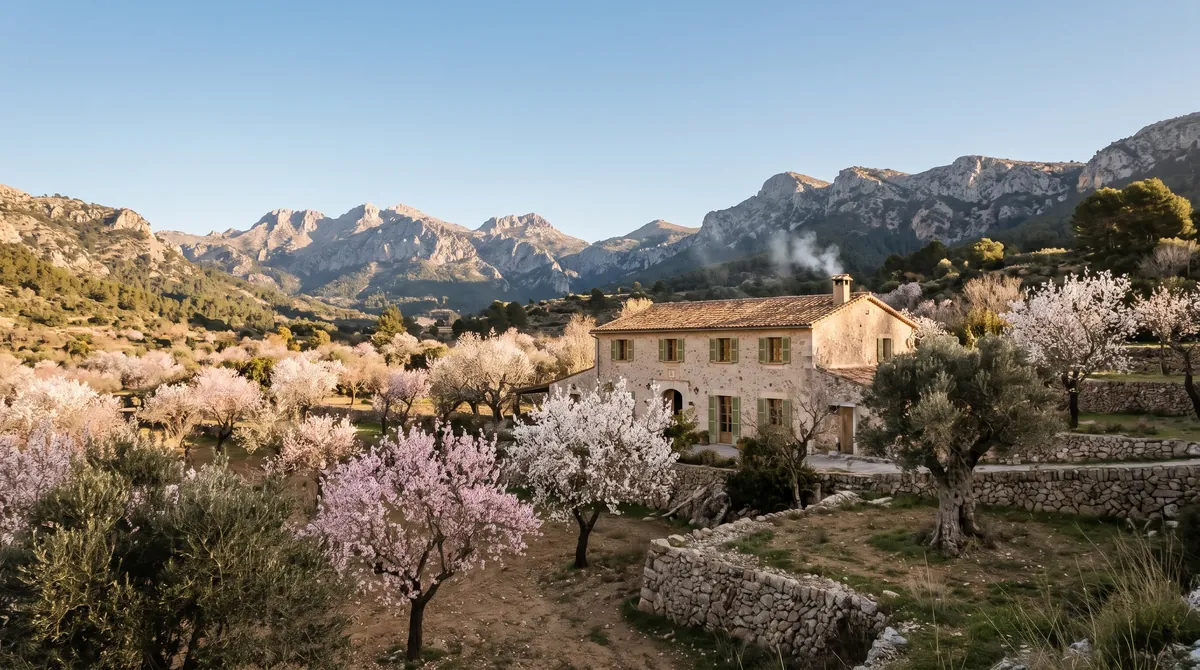
From late January to February, almond blossom covers the central plain and the south west in white and pale pink. The trees stand in old orchards between dry stone walls, often with a carob tree or a windmill nearby, and on a still morning their scent is faint and sweet. See it slowly: drive the minor roads between the small towns of the plain, stop where the trees are thickest and walk along the edges of the fields, never into private orchards. The blossom changes from week to week, so if it is the main reason for your trip, stay on the plain and keep your plans flexible.
Walking and cycling season
Winter is walking time. The season for long walks in the Tramuntana runs roughly from autumn to spring, when the air is clear, the paths are cool and the views reach far out to sea. A sunny day after rain is the best of all, with streams running and every terrace bright green. Start early, carry a warm layer for the tops and check the forecast, because weather in the mountains can change quickly and paths turn slippery after rain.
Late winter and spring also bring many cyclists, who come for the quiet roads, the long climbs and the mild temperatures. If you drive in the mountains, expect groups on the bends and give them plenty of room. If you ride yourself, a hotel with secure bike storage and an early breakfast makes all the difference.
Fires, demons and Christmas lights
Winter has its own festivals. Sant Antoni in mid January is the most spirited: bonfires blaze in village squares, demons dance through the streets to traditional music, and animals are brought to be blessed. It is celebrated in many places, but especially in Sa Pobla and Manacor, where whole towns turn out. Expect crowds, smoke and late nights, wrap up warmly, and book a room early if you want to stay close by.
In December, Palma settles into the Christmas season, with lights in the old town, seasonal markets and nativity scenes in the churches. It is a gentle time for a city break, with museums and cafés to fill the short afternoons.
Oranges, markets and long lunches
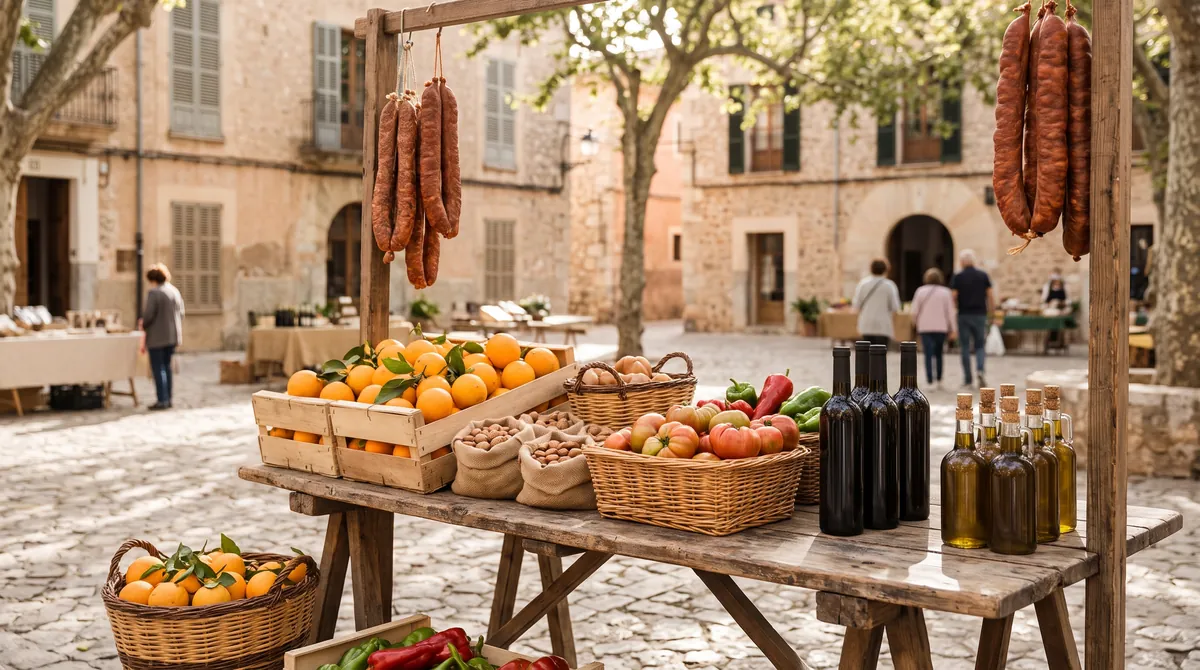
In the Sóller valley, oranges are harvested in winter, and the groves glow with fruit against dark leaves just as the rest of the island is at its quietest. Walk the old paths between the orchards and you may see crates being filled under the trees. Elsewhere, winter is the season of market mornings, museum afternoons and long lunches that drift towards dusk. With fewer visitors, the better tables are easier to get, waiters have time to talk and the villages are quiet enough to hear your own footsteps.
This is Mallorca in winter, an island many visitors never see: mild, green and unhurried, and at its most generous to those who come for quiet.
Choosing a winter base
Where you stay decides what kind of winter you have. Palma is the easiest choice for a short break, with museums, markets and restaurants open all season. The Sóller valley suits walkers, with the orange groves on the doorstep and mountain paths leading straight out of town. A country estate on the plain is the place for the almond blossom and for evenings by the fire. Wherever you go, ask which restaurants nearby stay open in winter, because in small villages the choice can shrink to one or two, and some close on certain weekdays.
What to pack
- Layers: a warm jumper and a light padded jacket for cool evenings and mountain tops.
- A rain jacket: showers are usually short, but they can be heavy.
- Walking shoes with good grip for limestone paths that turn slippery after rain.
- Something warm but smart for dinner, because fireside tables invite long evenings.
Questions and answers
Is Mallorca worth visiting in winter?
Yes, if you come for walking, villages, food and quiet rather than beaches. Days are mild and often sunny, there are fewer visitors and tables are easier to find. Check that your hotel is open and properly heated.
When is the almond blossom in Mallorca?
From late January to February, mainly on the central plain and in the south west. The exact timing changes each year with the weather, so stay flexible if the blossom is your main reason to travel.
Can you swim in Mallorca in winter?
The sea is cold for most people in winter, although a few locals swim all year. Treat any swim as a brisk dip, and choose a hotel with a heated pool if warm water matters to you.
What is Sant Antoni?
A festival in mid January with bonfires, dancing demons and the blessing of animals. It is celebrated in many villages, but especially in Sa Pobla and Manacor.
Further reading in our network
- island mallorcaThe island atlas
The island atlas of Mallorca, with villages, walks and festivals through the seasons.
Our articles are general travel information written with care. Opening months, access and local rules change; check the details with your hotel before you travel.