
Deià, Valldemossa and Fornalutx: villages of the Tramuntana
Stone villages, orange valleys and terraced slopes above the sea. How to see Mallorca’s mountain villages at walking pace, and why it pays to wake up in them rather than drive in with everyone else.
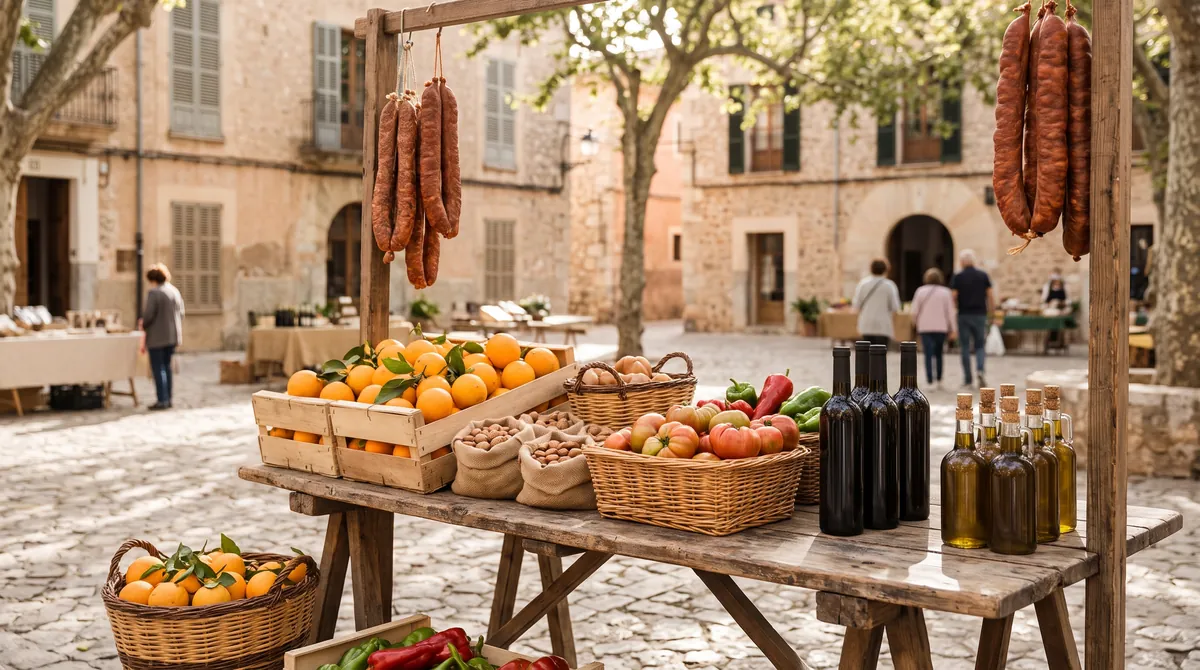
At eight in the morning Valldemossa still belongs to the people who live there. Someone sweeps the step in front of a house lined with flower pots, a delivery van edges down a lane barely wider than itself, and church bells mark the hour over roofs of old clay tiles. A couple of hours later the first coaches arrive and the lanes fill. The secret of the Tramuntana villages is simple: sleep in them, or near them, and see them before and after the day visitors do.
A landscape built by hand
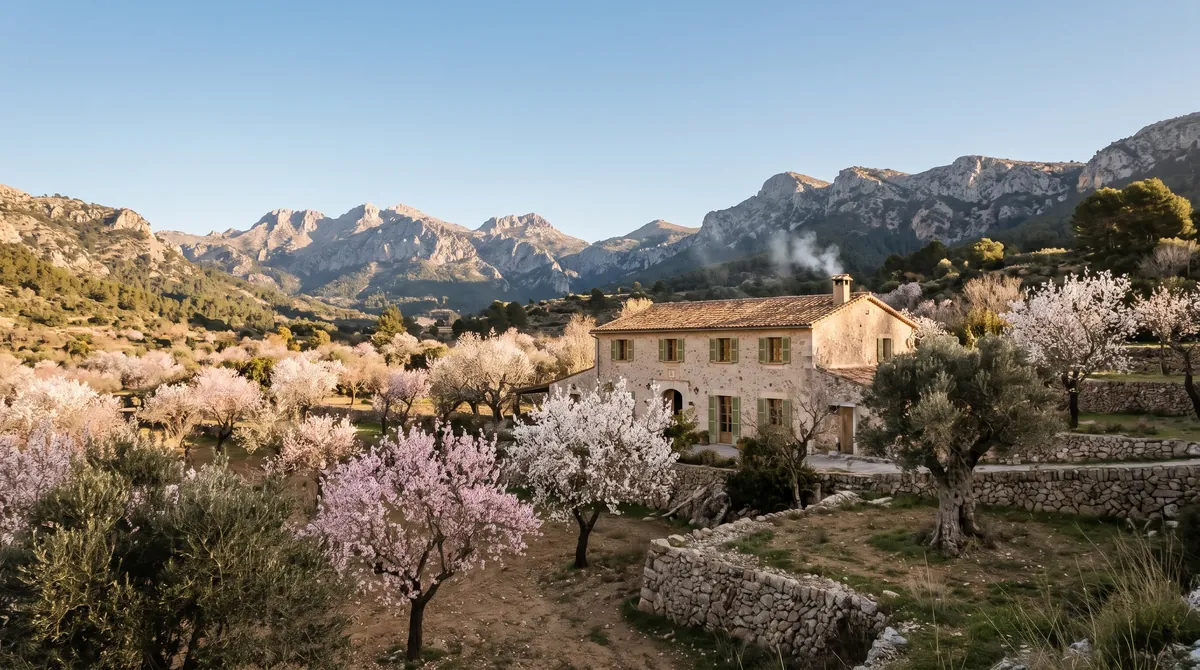
The Serra de Tramuntana runs along the north west coast of Mallorca, a wall of limestone rising from the sea to Puig Major, the highest peak at about 1,436 m. It has been a UNESCO World Heritage cultural landscape since 2011, and the listing is not about wild nature alone: it recognises the terraces, dry stone walls and irrigation channels that generations of farmers built into the slopes to grow olives, citrus and vegetables. As you walk, look for the stone channels that lead water from springs to the fields, and in the holm oak woods for the flat circles where charcoal burners once worked. Every village sits inside this handmade landscape, which is why the stone houses seem to grow out of the hillside.
Valldemossa: a famous winter
Valldemossa lies in a high valley about half an hour from Palma, gathered around the Royal Charterhouse, a former monastery where the composer Frédéric Chopin and the writer George Sand spent the winter of 1838 to 1839. Sand later wrote a book about that season, not always kind to the islanders, and Chopin, already unwell, worked on his music while the rain fell on the mountains. The charterhouse can be visited today, and from its gardens the view drops over terraces of olives and almonds into the valley.
Stay the night and walk the lanes in the early evening, when the stone glows and the cafés serve coca de patata, the light, sweet potato bun the village is known for. Morning is the other good hour; by eleven the main lanes are busy.
Deià: a village of artists above the sea
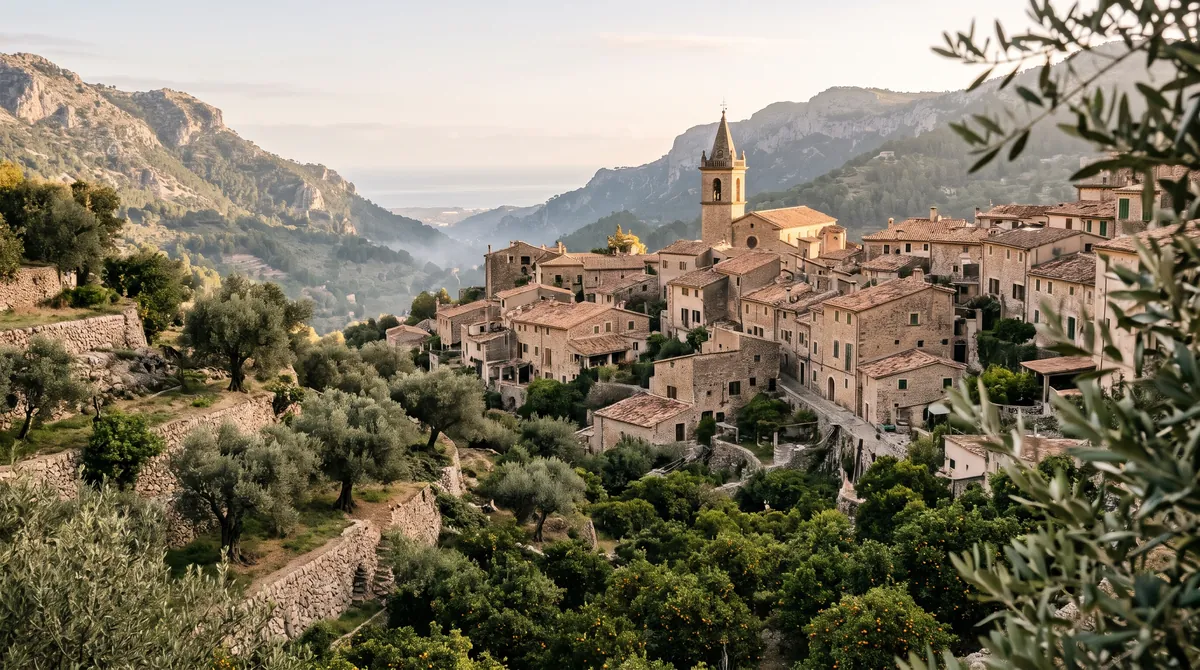
Along the coast road, Deià climbs a hillside above the sea, a cluster of stone houses with green shutters stacked around a small hill crowned by its church. It has long been loved by artists, and the poet Robert Graves lived here for much of his life; he is buried in the churchyard at the top of the village, in a simple grave with a view that explains why he stayed. Climb up in the late afternoon, when the light turns the terraces gold and the sea below changes from blue to silver. A steep path leads down to a small rocky cove with fishermen’s huts above the water, a good place for a swim on a calm day.
Sóller, the old train and Fornalutx
Over the ridge, Sóller fills a broad valley of orange and lemon groves, a real town of solid stone houses, shops and a lively square in front of its church. The most graceful way to arrive is the historic wooden train from Palma, running since 1912, which climbs into the mountains and through a series of tunnels in about an hour. From Sóller a tram, running since 1913, rattles down through the orchards to Port de Sóller and its round harbour. Take an open carriage in spring, when the scent of citrus blossom drifts across the tracks.
Fornalutx, a few kilometres further up the valley, is one of the best kept villages of the island: steep stepped lanes, stone houses with wooden shutters, terraces of citrus and a view across to the high peaks. It is small enough to see in an hour, which is exactly why it rewards those who stay, sitting in the little square in the evening when the day trippers have gone. An old mule track links it with Sóller by way of the hamlet of Biniaraix, a walk of roughly an hour to an hour and a half through orchards and between stone walls.
Walking the Dry Stone Route
The best way to see these villages is on foot. The GR 221, known as the Dry Stone Route, crosses the mountains on old paths, mule tracks and cobbled ways, with refuges along the way where walkers can sleep and eat. You do not need to walk all of it: short stages link the villages beautifully, and arriving somewhere on foot is a very different experience from looking for a parking space.
- Deià to Sóller: an old path through olive terraces and past farmhouses, roughly two to three hours, with the sea beside you for much of the way.
- Sóller to Fornalutx: through orange groves and the hamlet of Biniaraix, about an hour to an hour and a half.
- Around Valldemossa: paths climb into holm oak woods with views down to the coast; ask locally which routes are open and well marked.
The best seasons for walking run from autumn to spring, when the air is clear and the paths are cool. In summer, start at first light, carry more water than you think you need and finish before the midday heat. Wear proper shoes: the limestone is sharp in places, polished smooth in others and slippery after rain.
On the mountain road
The road through the Tramuntana is a beautiful drive and a demanding one. It winds along cliffs and through villages with tight bends, and in season you share it with cyclists, coaches and hire cars. Drive slowly, keep well to your side on blind bends and pass cyclists only with plenty of room. Parking in the villages is limited, so arrive early or late in the day. And never drink and drive here: the bends and the drop to the sea forgive nothing.
The secret of the Tramuntana villages is simple: sleep in them, or near them, and see them before and after the day visitors do.
Where to base yourself
Each village has its own mood after dark. Valldemossa is closest to Palma and the airport, handy for a short stay. Deià is the most romantic, small and steep with almost no flat ground. Sóller is the most practical base, a town with shops, a market, the most life in the evening and transport in every direction, while Fornalutx is the quietest of all. Wherever you stay, ask about parking and luggage, because many village houses are reached by steps rather than streets.
Questions and answers
Which Tramuntana village is best to stay in?
Sóller is the most practical, with shops, transport and a harbour close by. Deià and Fornalutx are quieter and more intimate, and Valldemossa is closest to Palma. Choose according to whether you want convenience or silence after dark.
Can I visit the villages without a car?
Yes. Buses run along the mountain road, the historic train connects Palma with Sóller and the tram continues to Port de Sóller. Combined with a few walking stages, you can see the region well without driving at all.
Is the GR 221 suitable for beginners?
Some stages are long and steep, but short sections between villages suit anyone with reasonable fitness and good shoes. Walk in the cooler months, carry water and check the forecast, as conditions in the mountains change quickly.
Further reading in our network
- island mallorcaThe island atlas
The island atlas of Mallorca, with more on the mountain villages, the coast and walks across the island.
Our articles are general travel information written with care. Opening months, access and local rules change; check the details with your hotel before you travel.