
The Algarve beyond the beaches: hills, cliffs and quiet towns
Portugal’s southern coast is far more varied than its beach towns suggest. The cliffs of the west, the lagoons of the east and the cork oak hills inland, and where to stay in each.
Turn your back on the sea for half an hour and the Algarve changes completely. The road climbs from the coast into low hills where the air smells of warm earth and wild herbs, almond and fig trees stand in red soil, and stone walls run between old farmhouses. A dog barks in a hamlet; someone sweeps the step of a whitewashed house. Down on the coast the beach towns are busy, but up here the only noise in the afternoon comes from the cicadas.
Three Algarves in one
The Algarve is Portugal’s southern coast, but it is really three landscapes side by side. In the west, golden cliffs, sea stacks and grottoes face the open Atlantic. In the east, a long chain of lagoons, islands and salt pans shelters behind sandbanks. Inland rise the cork oak hills of Monchique and the gentler country of the barrocal, with its almond, fig and carob trees. Choosing where to stay is choosing which of the three you want outside your window.
| Area | Landscape | Highlights | Best for |
|---|---|---|---|
| The west | Golden cliffs, sea stacks, grottoes and windswept headlands | Ponta da Piedade near Lagos, the Benagil sea cave, Sagres and Cape St Vincent | Coastal walks, boat trips, wild sunsets |
| The east | Lagoons, islands, salt pans and old towns | The Ria Formosa Natural Park and its flamingos, Tavira | Birdwatching, calm days, town life |
| Inland | Cork oak hills and orchards of almond, fig and carob | Monchique, Caldas de Monchique, the barrocal, Silves | Walking, cycling, quiet rural stays |
The west: cliffs, caves and the end of Europe
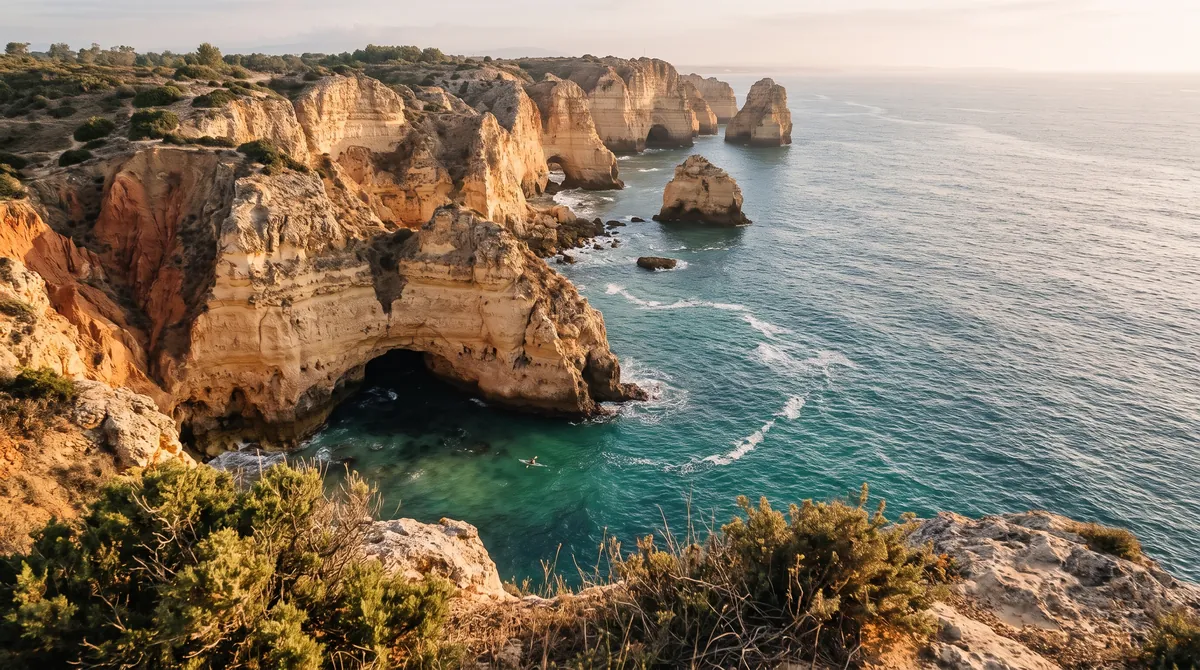
Around Lagos the coast breaks into ochre and gold cliffs, worn into arches, stacks and grottoes. At Ponta da Piedade, a headland just outside the town, steps lead down towards the water, and small boats weave between the rocks. Further east along the same coast, the Benagil sea cave, with its domed roof open to the sky, is best seen from the water by boat or kayak. Go with a local guide and only in calm seas; swimming in from the beach is risky, as boats pass close and the swell can build at the entrance.
Further west the land flattens into windswept heath around Sagres and Cape St Vincent, the south western tip of mainland Europe. The wind is strong and often relentless, the cliffs are sheer and the sunsets are wild and enormous. Bring a warm layer even in summer, keep well back from the edges, many of them unfenced, and stay for the moment the sun drops into the ocean.
The east: lagoons, salt pans and Tavira
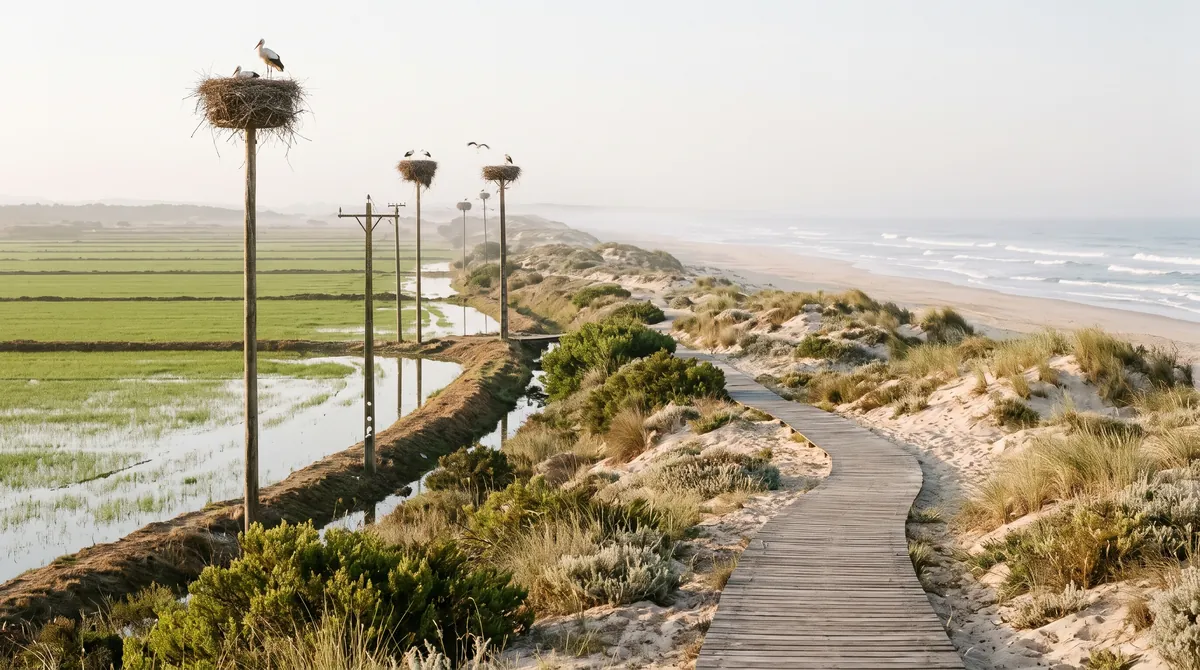
From Faro eastwards the mood softens. The Ria Formosa Natural Park is a maze of lagoons, channels, marshes and barrier islands, with salt pans where flamingos feed in the shallows. Small boats cross to the islands, where long sandy beaches face the sea on one side and the calm lagoon on the other. Birds are most active early and late in the day, when the water turns pink and silver and the light is kind to the camera.
Tavira is the most graceful town on this stretch: a river crossed by an old bridge in the Roman style, a skyline of church towers and streets of tiled and whitewashed houses, many with distinctive pointed roofs. It is a town to stay in rather than pass through, with slow evenings by the river and mornings that begin with coffee in a shaded square.
Inland: Monchique, the barrocal and Silves
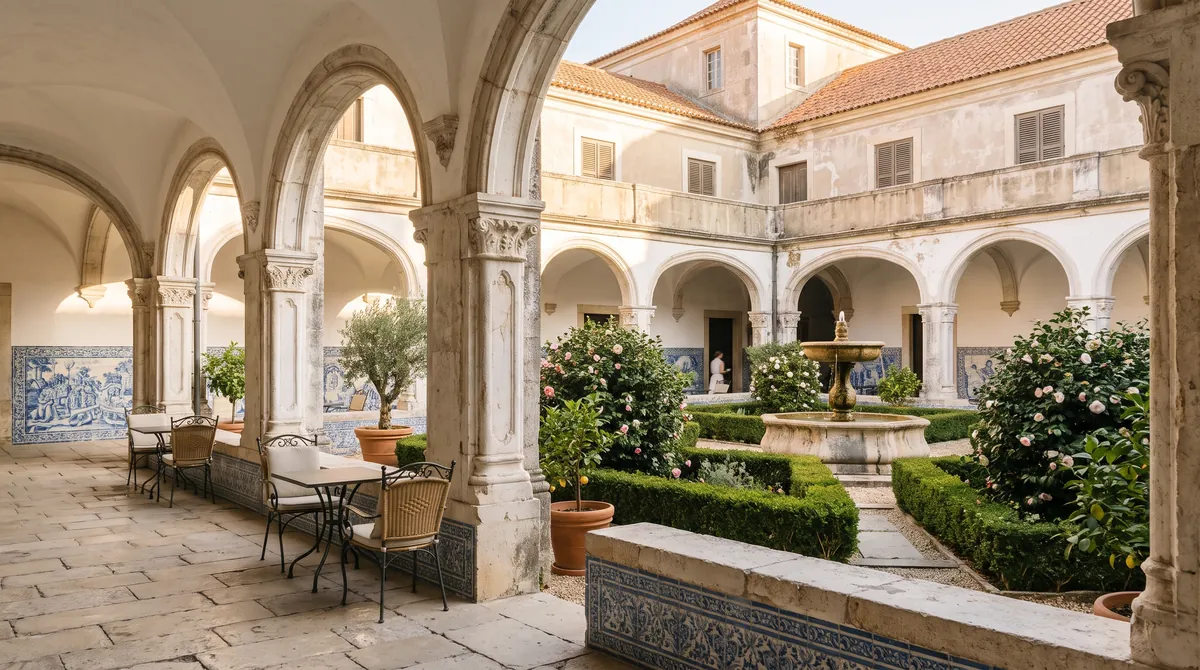
The hills of Monchique rise inland behind the western Algarve, the highest ground in the region, wooded with cork oaks and noticeably cooler than the coast. Tucked into a green valley below the town lies Caldas de Monchique, a small spa village with old buildings around a shaded square, where the afternoon passes to the sound of running water. It makes a peaceful base for walks among the trees.
Between the hills and the sea lies the barrocal, a gentle limestone country where many old farms have become rural quintas with a handful of rooms. In late winter the almond trees blossom white and pale pink. Silves, once an important town in the Moorish period, is crowned by a castle of red sandstone that glows warmly in the late afternoon sun, and its quiet streets are lovely in the hour before dinner.
Down on the coast the beach towns are busy, but up here the only noise in the afternoon comes from the cicadas.
What to eat
Algarve cooking follows the sea and the hills. A cataplana is a seafood stew cooked and served in a copper pan made of two hinged halves, opened at the table in a cloud of fragrant steam. In summer grilled sardines are eaten simply, with bread, salad and a glass of something cold. Inland, almond sweets fill the pastry shops, and medronho, a strong spirit made from the fruit of the strawberry tree, is offered at the end of a meal. Sip it slowly.
When to come and where to sleep
Spring and autumn are the Algarve’s quiet seasons, mild and bright, ideal for walking and cycling on the cliff paths and country lanes. The sea is warmest late in the summer, so September often brings warm water with fewer people. In high summer the hills of Monchique offer a cooler retreat than the coast.
For a stay with character, look beyond the big resorts to small hotels in old town houses in Tavira, Lagos or Silves, and to rural quintas inland, where you wake to birdsong rather than traffic and the sea is a short drive away. A week divides naturally into three:
- Two nights in the west, near Lagos, for the cliffs, a boat trip to the grottoes and a sunset at Cape St Vincent.
- Two nights inland, in the hills of Monchique or the barrocal, for walking, Silves and long, quiet dinners.
- Two or three nights in the east, in Tavira, for the lagoons, the islands and the flamingos of the Ria Formosa.
Travelling from west to east means you finish with the gentlest landscape, which is exactly how a holiday should end.
Questions and answers
Can you swim into the Benagil cave?
It is best seen from the water by boat or kayak with a local guide. Swimming in from the beach is risky because of boat traffic and swell, so go only in calm seas and with someone who knows the conditions.
Is the Algarve worth visiting outside summer?
Very much. Spring and autumn are mild and quiet, ideal for walking and cycling, and in late winter the almond trees blossom inland. Some beach businesses close, but the old towns and many rural stays stay open.
Where is the quietest part of the Algarve?
The inland hills of Monchique and the barrocal, and the eastern towns around Tavira and the Ria Formosa, feel much calmer than the busy beach resorts.
What is medronho?
A strong spirit made from the fruit of the strawberry tree, which grows wild in the hills. It is often served at the end of a meal, and it is best sipped slowly.
Further reading in our network
- PalmianaTravel journal
A travel journal of stories and destinations, ideal for planning a trip away from the obvious routes.
Our articles are general travel information written with care. Opening months, access and local rules change; check the details with your hotel before you travel.