
Comporta and the wild Alentejo coast: dunes, rice fields and cliffs
Rice fields, storks and wooden houses among the pines, then cliffs, coves and fishing villages further south. How to plan a quiet stay on one of Portugal’s wildest stretches of coast.
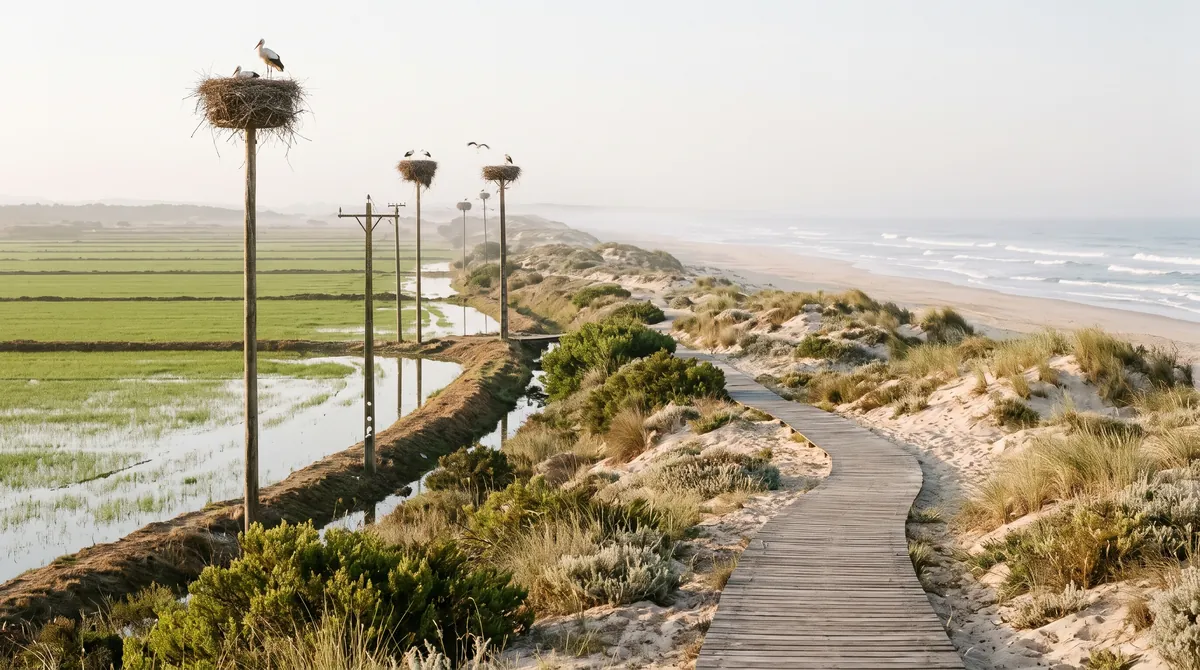
The road to Comporta runs through rice fields. In early summer they are a bright, wet green, and white storks stand in them on long legs or sit on great untidy nests on top of poles beside the road. Then the pines begin, the air smells of resin and salt, and sand appears on the verges long before you see the sea. When you finally walk over the dunes, the beach runs away in both directions further than you can see, and the Atlantic rolls in, cold, clean and loud.
South of Lisbon, across the water
This coast begins south of Lisbon, beyond the Sado estuary and the Tróia peninsula, a long finger of sand that almost closes the mouth of the river. From here the Alentejo coast runs south in long sandy beaches backed by dunes and pine woods, with remarkably little building in between. A car is needed: villages are small, beaches are reached by sandy tracks and boardwalks, and public transport will not take you to the places worth staying.
You can drive round the estuary, or take the short ferry crossing from Setúbal to Tróia and continue down the peninsula. The ferry is the nicer start, a slow crossing with gulls overhead and the town falling behind you, and it sets the pace for what follows.
Comporta: a village that whispers
Comporta itself is small, a village among rice fields with a few streets and old houses built of wood and reed, the traditional materials of a sandy coast where stone was scarce. Over the years it has become a byword for understated style. What draws people is not glamour but restraint: low buildings, natural materials, long empty beaches and the feeling that nobody is trying too hard.
That restraint is worth protecting, and it shapes the stays. Expect small hotels, houses among the pines and rural stays on the edge of the rice fields, often with reed roofs, wooden decks and simple, light-filled rooms. Expect calm, not nightlife; the evening entertainment is the sunset over the dunes and the frogs singing in the paddies. Bicycles make sense on the flat lanes, and dinner is usually early, unhurried and close by.
Expect calm, not nightlife; the evening entertainment is the sunset over the dunes and the frogs singing in the paddies.
Dolphins in the Sado estuary
Bottlenose dolphins live in the Sado estuary, and boat trips to see them leave from Setúbal. It is a gentle, unhurried way to meet wildlife: the hills on one side, the sandbanks of Tróia on the other, and with luck a group of grey backs rising and falling beside the boat.
Choose a small boat and a crew that keeps its distance from the animals and never chases them; the best encounters happen when the dolphins decide to come closer. The water is often calmer in the morning, before the afternoon wind picks up, and a windproof layer is welcome even in July.
The Atlantic: beautiful, cold and strong
The beaches here face the open ocean, and the Atlantic is cool even in summer. More importantly, waves and currents can be strong, and a sea that looks calm from the dunes can pull hard once you are in it. Swim at beaches with lifeguards, respect the flags and stay within your depth when the sea is rough. If a current catches you, swim parallel to the shore rather than against it, and raise an arm to signal for help.
The dunes themselves are fragile. Use the wooden boardwalks and marked paths, which protect the plants that hold the sand in place, and take home everything you bring. Shade is rare on these beaches, and on a hot day the nearest may be the pines behind the dunes.
Further south: cliffs, coves and fishing villages
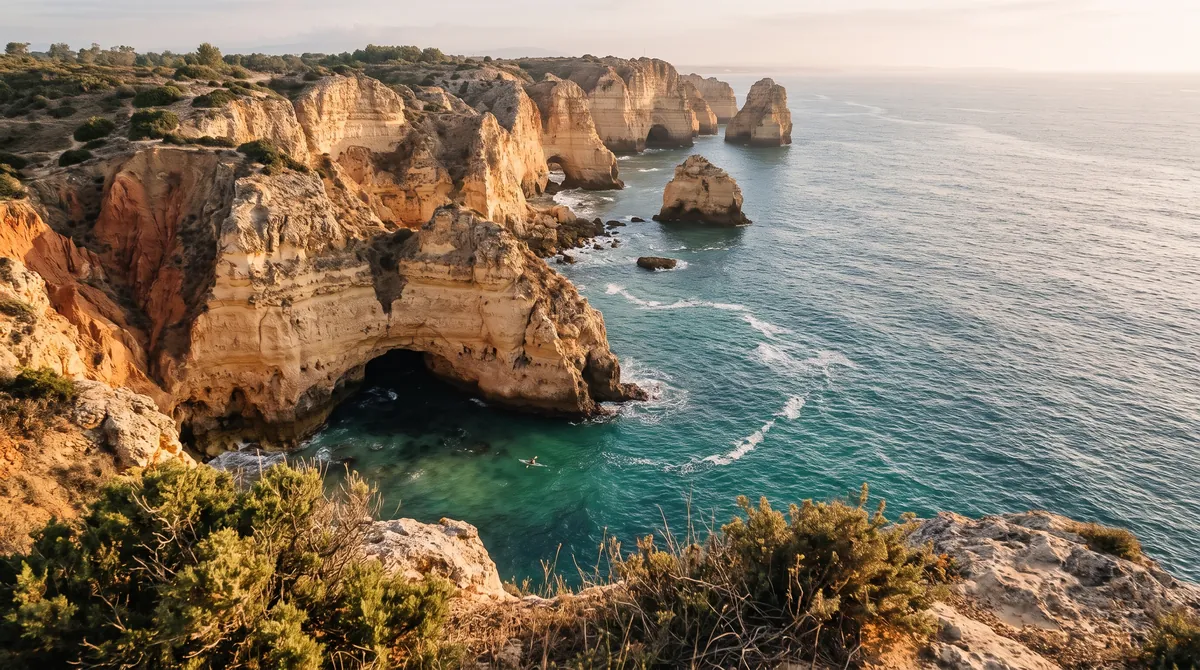
Further south the sand gives way to cliffs as you enter the Southwest Alentejo and Vicentine Coast Natural Park. Dark rock drops to small coves, rivers meet the sea in sandy estuaries, and the fishing villages are lively in summer and very quiet outside it. Vila Nova de Milfontes sits at the mouth of a river, with beaches on the estuary as well as on the ocean. Zambujeira do Mar is smaller, perched on a cliff above a sandy cove, with fishing boats drawn up below.
Both make good bases for a few days of walking, and both feel a world away from the polish of Comporta. Rooms here are often in simple village houses or rural stays inland, where the night is dark and the only sound is the wind.
Walking the Rota Vicentina
The Rota Vicentina is a network of walking trails along this coast and through its hinterland. Its best-known route is the Fishermen’s Trail, which follows narrow paths along the clifftops, with views straight down to the water and the rocks where anglers stand. It is spectacular walking, and more demanding than it looks:
- Walk in the morning or late in the afternoon, as there is almost no shade on the clifftops.
- Expect soft sand on many stretches; it is slow and tiring, so plan shorter days than you would in the hills.
- Stay well back from cliff edges, which can be undercut and crumbly, and keep away from them altogether in strong wind.
- Carry plenty of water, a hat and a windproof layer, even on a sunny day.
- Arrange a taxi back, or choose a stay that can help move your luggage between stages.
When to go and how long to stay
The coast is at its best from May to October, when the days are long and the sea is at its least cold. July and August are the busiest months; spring and autumn are the quietest, with soft light, empty beaches and the best walking weather, though some small places close outside the main season. A week works beautifully: three or four nights near Comporta, then two or three further south by the cliffs, travelling slowly down the coast rather than back and forth.
Questions and answers
Is the sea warm enough to swim at Comporta?
The Atlantic stays cool even in summer, which many people find refreshing on a hot day. Waves and currents can be strong, so swim at beaches with lifeguards and follow the flags.
Do I need a car on the Alentejo coast?
Yes. The villages are small and spread out, beaches are reached by sandy tracks and boardwalks, and public transport does not reach most rural stays.
Is the Fishermen’s Trail difficult?
It is not technical, but long stretches of soft sand make it more tiring than the distance suggests. Walk shorter stages, start early and carry water, as there is little shade.
When is the coast quietest?
Spring and autumn. The weather is often mild, the beaches are almost empty and walking conditions are at their best, though some small places close outside the main season.
Further reading in our network
- PalmianaTravel journal
Travel stories and destination portraits for readers who like slow journeys and quiet coasts.
Our articles are general travel information written with care. Opening months, access and local rules change; check the details with your hotel before you travel.