
A quinta in the Douro: terraces, port and river light
On the schist terraces above the river Douro, old wine estates open their doors to guests. How to choose a quinta, when to come for the harvest and how to spend two slow days among the vines.
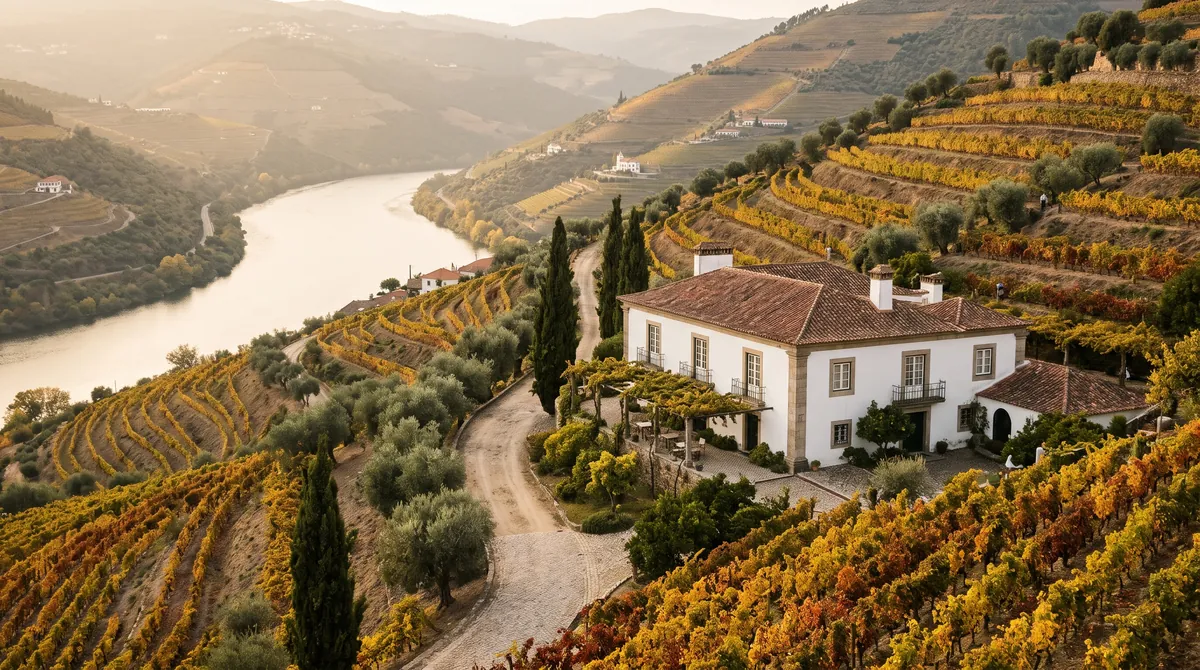
The first thing you notice is the quiet. Early in the morning the Douro lies flat and pewter grey at the bottom of the valley, and the terraces climb away from it in hundreds of narrow steps, each one held up by a dry wall of schist. On the veranda of the old house the stone is still cool from the night. Somewhere below, a tractor crawls along a terrace barely wider than its wheels, a dog barks once and gives up, and the first coffee of the day tastes better for the view.
A landscape made by hand
The Alto Douro Wine Region has been a UNESCO World Heritage Site since 2001, and you understand why within minutes of arriving. Almost every slope has been reshaped by people: generations of workers broke the schist, built the walls and carried soil onto the steps so that vines could grow where little else would. Between the vineyards stand olive and almond trees, and on the slopes too steep even for terraces the scrub smells of warm herbs in the afternoon.
The valley also has a long paper trail. It was demarcated in 1756 under the Marquis of Pombal, which makes it one of the oldest regulated wine regions in the world. Boundaries were marked and the trade in port was put on a firmer footing. When people here speak of tradition, they often mean something precise and centuries old.
What a quinta is, and what it feels like to stay in one
A quinta is a wine estate: a house, often a small chapel and a few outbuildings, the cellars and the vineyards around them. Many now offer rooms, from a handful in the old family house to a newer wing set into the slope. Staying on one is less like a hotel and more like being a guest on a working farm. Breakfast may come with the estate’s own olive oil and jam, the dogs know the way to the pool, and in late summer you hear the business of the harvest from your window.
The position of the house shapes the whole stay. A quinta close to the river has the water at its feet and easy access to boats and the railway, but the valley floor can feel enclosed and gets very hot in July and August. One high on the slopes has longer views, cooler nights and a sense of space, at the price of a winding drive every time you want to go anywhere. Neither is better. Decide whether you want to be out exploring or happily marooned at the top.
Before you book, a few questions save surprises:
- Is the estate still making wine, and can guests see the cellar?
- How long is the drive to Pinhão or Peso da Régua, in minutes rather than kilometres?
- Is dinner served on the estate, or will you need to drive out every evening?
- Is there shade on the terrace in the afternoon, and are the rooms kept cool by thick walls or air conditioning?
- During the harvest, are guests welcome to join in, and on which days?
Getting there: road, rail and river
Most visitors come from Porto, a drive of roughly an hour and a half to Peso da Régua. The motorway is quick; the last stretch is not. Many quintas lie at the end of narrow lanes with tight bends and few barriers, so drive it in daylight the first time and allow more time than the map suggests.
The more beautiful approach is the Douro railway line, which follows the river for long stretches, so close in places that the water seems to run beside the carriage. The small station at Pinhão is decorated with azulejo panels, the blue and white tiles of Portugal, and they are worth a few minutes before you look for your lift. Many estates will collect guests from the station if you ask in advance.
You can also see the valley from the water. River trips by boat range from a gentle hour to a full day, and the view from below explains the terraces better than any map: seen from the river, the slopes look like contour lines drawn across the hills.
Harvest time and the rest of the year
The grape harvest, the vindima, runs through September and into early October. It is the liveliest moment of the year: pickers move along the terraces with baskets, trailers of grapes come down the lanes and the cellars smell of crushed fruit. Some estates still tread grapes by foot in stone tanks called lagares, usually in the evening after the picking, and guests are sometimes invited to roll up their trousers and join in. It is sticky, tiring and very good fun.
Harvest weeks are also the first to be booked, so reserve early and confirm what guests can actually do. Outside the harvest the valley has other moods. Spring brings fresh green leaves and almond blossom; summer is hot, often very hot on the valley floor, and best enjoyed early and late in the day; late autumn turns the vines to copper and red. Winters are cool and quiet, with mist lying on the river in the mornings.
Staying on a quinta is less like a hotel and more like being a guest on a working farm.
Port, table wines and how to taste them
Port is the wine the Douro is known for: a fortified wine, made by adding grape spirit to stop fermentation while some of the natural sweetness remains. Traditionally the young wine travelled downstream to age in the lodges of Vila Nova de Gaia, opposite Porto, where many cellars still are. In the valley you taste it where the grapes grow, often alongside the red and white table wines of the Douro, which are highly regarded in their own right. Ask to try a tawny, aged in wood until it turns the colour of amber, beside a younger, darker ruby, and the difference becomes clear at once.
A tasting at your own quinta is the ideal start, because you can walk back to your room. If you want to visit other estates, book ahead, since many receive visitors by appointment, and arrange a driver or a taxi rather than taking the wheel yourself. The roads are narrow, the drops are real and the wines are stronger than they seem. Never drink and drive.
Two or three nights: a simple plan
- Day one: arrive by train or car in the afternoon, unpack, and take a slow drink on the terrace while the light drops behind the hills.
- Day two: walk through the vines in the cool of the morning, taste before lunch, rest through the heat, then take a boat trip or wander through Pinhão in the late afternoon.
- Day three: drive a short way south of Peso da Régua to Lamego and its baroque stairway, which climbs to a pilgrimage church above the town, then return for a last sunset on the terrace.
Resist the urge to fill every hour. The pleasure of a quinta lies in the moments in between: swallows skimming the pool, the shadow sliding across the opposite slope, the smell of warm stone as the evening comes. Two nights give you a taste; three let you settle in.
Questions and answers
Do I need a car in the Douro Valley?
Not necessarily. You can arrive by train, and many quintas will collect guests from the station if asked in advance. A car gives you freedom, but the roads are narrow and winding, and you should never drive after a tasting.
Can guests take part in the harvest?
Some estates invite guests to pick grapes or to tread them by foot in the lagares, usually in September and early October. Ask when you book which days this happens, as it depends on the weather and the ripeness of the grapes.
Is summer a good time to visit?
Summers in the Douro are hot, especially on the valley floor. If July or August is your only option, choose a quinta with a pool and shade, walk early in the morning and keep the middle of the day for rest.
What is the difference between port and Douro table wine?
Port is fortified with grape spirit, which stops fermentation and keeps some natural sweetness. The Douro also makes dry red and white table wines from the same slopes, and many quintas produce both.
Further reading in our network
- vinorinaWine regions of Europe
Portraits of Europe’s wine regions, their landscapes, grapes and traditions, for travellers who like to taste where the wine is made.
Our articles are general travel information written with care. Opening months, access and local rules change; check the details with your hotel before you travel.