
Lisbon by neighbourhood: where to stay in the city of hills
Every quarter of Lisbon feels like a different city, and the one you sleep in shapes your stay. Alfama, Chiado, Príncipe Real, Bairro Alto, the Baixa and Belém compared, stairs and noise included.
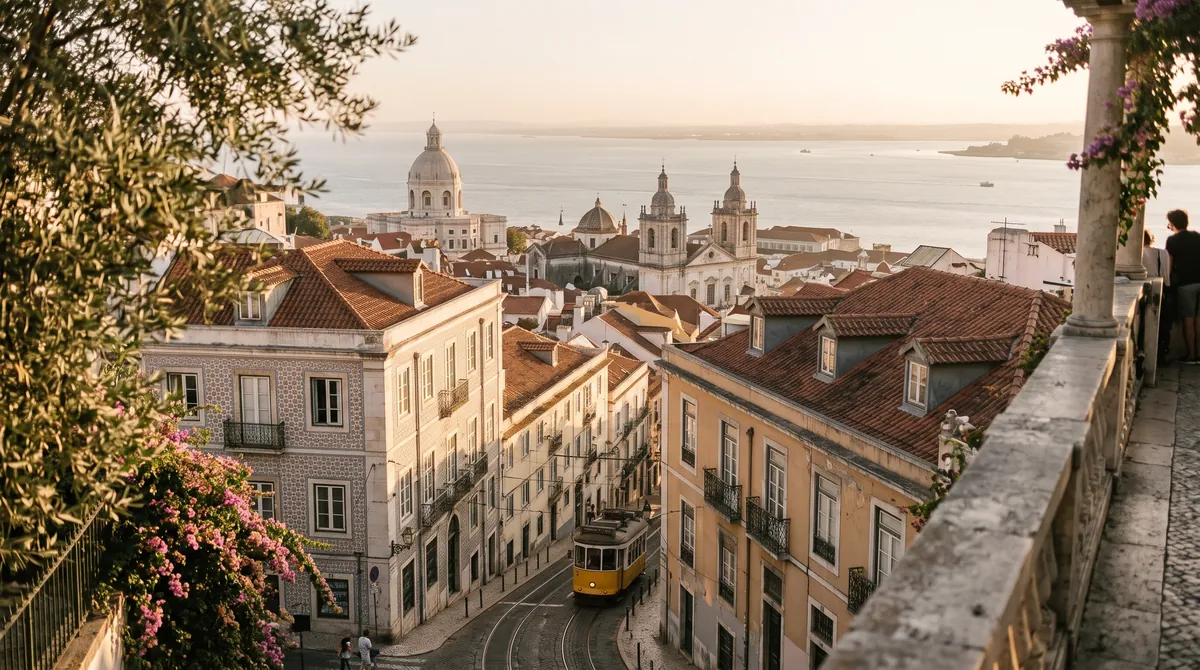
Lisbon introduces itself through your legs. Within an hour of arriving you have climbed a street so steep it turns into steps, stopped to catch your breath at a viewpoint, and looked down over a jumble of terracotta roofs to the wide, shining Tagus. A yellow tram grinds round a corner with a hand’s breadth to spare. Tiles glint on a façade, washing hangs from a balcony, and somewhere a café is grinding coffee. Choosing where to sleep here is really choosing which hill you want to climb at the end of the day.
A city of hills and a river
Lisbon spreads over steep hills above the Tagus estuary, and the shape of the land explains almost everything about the city. The old quarters cling to the slopes, the flat centre lies in the valley between them, and the river is never far from view. Much of the Baixa, the lower town, was rebuilt after the great earthquake of 1755 on a grid of straight streets in what is called the Pombaline style, orderly and elegant after the tangle of medieval lanes around it.
To get up and down there is tram 28, which rattles through the old quarters, a few funiculars that haul you up the steepest slopes, and a street lift that carries you from the Baixa up towards the Chiado. Use them, but expect to walk a great deal, which is half the pleasure. Wear comfortable shoes with a good grip: the pale cobbles of the pavements are polished smooth by countless feet and become slippery after rain.
Alfama and the old lanes
Alfama, the oldest quarter, is the Lisbon of old photographs: a maze of lanes and stairways tumbling down from the castle hill towards the river, with tiny squares, tiled façades and laundry strung between windows. It is also the home of fado, the melancholy song on the UNESCO list of intangible cultural heritage since 2011. In the evening music drifts out of small fado houses where a singer stands between the tables, accompanied by guitars, and the room falls silent.
Staying here is magical and slightly impractical. Taxis cannot reach many doors, luggage has to be carried up steps, and on fado nights the lanes stay lively until late. Choose Alfama if atmosphere matters more to you than convenience, and if you do not mind the climb.
Chiado, Príncipe Real and Bairro Alto
Up the hill from the Baixa, Chiado is the city’s elegant side: old cafés with marble tables, bookshops, theatres and broad pavements of patterned stone. It is central and polished, an easy first base, especially if you like to step out of the door straight into a café.
Further up, Príncipe Real feels residential and green, with gardens shaded by large old trees, small shops and quiet streets of handsome houses. It suits a second visit, or anyone who prefers to come home to calm. Between the two lies Bairro Alto, a grid of narrow streets that sleeps by day and fills at night with bars and people drinking on the pavements. It is great fun for an evening and a poor choice for sleep, as the noise often continues into the small hours.
The Baixa, Belém and the riverside
The Baixa is the flat heart of the city, its straight Pombaline streets running down to a great square open to the water. It is practical: level walking, good transport and every quarter within reach. It feels less like a village than the hills do, but a room on a quiet side street here can be the most restful option for a short break.
Belém lies west along the river, with space, gardens and two of Portugal’s great monuments, the Jerónimos Monastery and the Belém Tower, together a UNESCO World Heritage Site since 1983. Nights are quieter here, and the riverside promenade is lovely for an early walk. The trade-off is distance: you will take a tram or a train into the old quarters. Between the centre and Belém, the riverside itself appeals to travellers who want light, air and the wide estuary in front of them more than old stones.
The quarters compared
| Neighbourhood | Character | Good for | Keep in mind |
|---|---|---|---|
| Alfama | The oldest quarter, with lanes, steps and fado houses | Atmosphere, viewpoints, evenings of music | Steep, hard to reach by car, lively on fado nights |
| Chiado | Elegant, with cafés, bookshops and theatres | A central, polished first visit | Busy by day; rooms on main streets hear the crowds |
| Príncipe Real | Leafy, with gardens and small shops | A calm, residential feel close to the centre | Uphill from almost everywhere |
| Bairro Alto | Quiet by day, lively at night | Bars and late evenings | Noisy into the small hours |
| Baixa | Flat, straight Pombaline streets | Easy walking and transport | Less of a village feel, busy with visitors |
| Belém | Spacious riverside district with great monuments | Museums, gardens, quiet nights | A tram or train ride from the old quarters |
Light sleepers should ask for a room at the back or on an upper floor, whichever quarter they choose.
Sleeping well in a townhouse
Many of Lisbon’s small hotels occupy restored townhouses, with tiled stairwells, high ceilings, wooden floors and tall windows onto iron balconies. They are full of character, and they have quirks. Old buildings were not designed for lifts, rooms vary in size and outlook, and a window over a tram line can wake you at dawn. A few questions before booking save a lot of disappointment:
- Is there a lift, and does it reach every floor, or are the last flights by stairs?
- Does the room face the street, a tram route or a quiet inner courtyard?
- Can a taxi stop at the door, or is the entrance on a lane or up a flight of steps?
- Are the windows double glazed, and is there air conditioning for warm summer nights?
- Is there a terrace or a roof with a view of the river?
Viewpoints, tiles and a custard tart
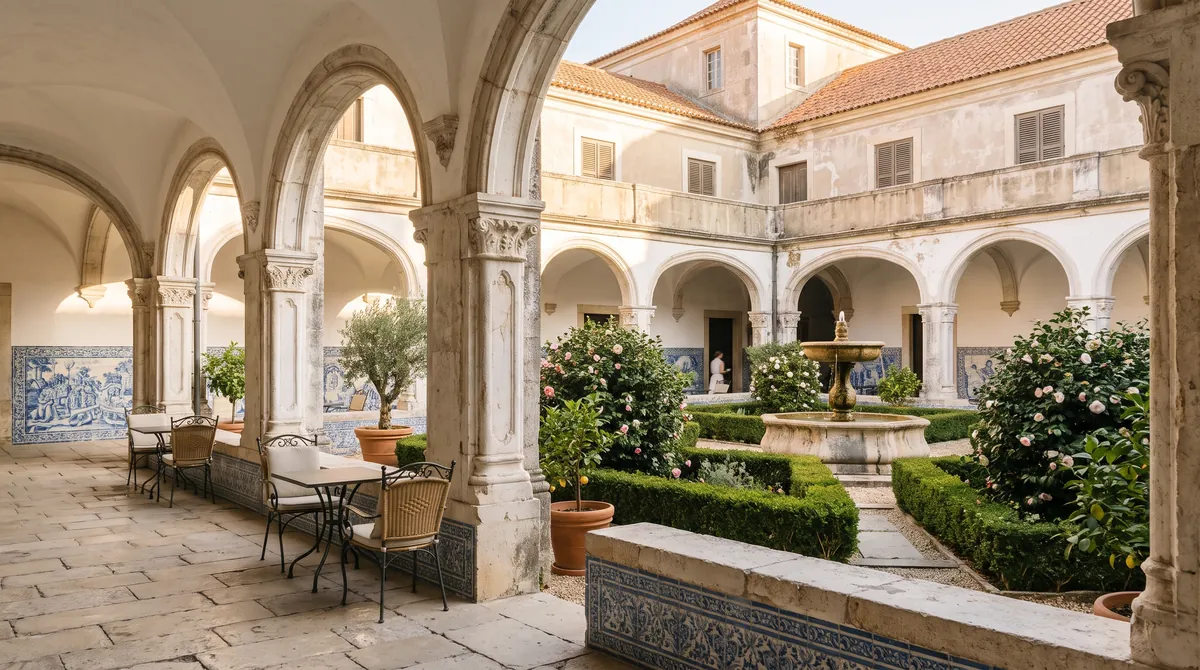
The miradouros, Lisbon’s viewpoints, are its free theatre. Most of the hills have one, often with a kiosk, a few benches and a view across roofs and domes to the river. Go at the end of the day, when the light turns the city honey-coloured and the water silver. On the way, look at the façades: many are covered in azulejos, glazed tiles in blue, green and ochre that protect the walls and shine after rain.
And then there are pastéis de nata, small custard tarts with blistered tops and flaky pastry, best eaten warm with a dusting of cinnamon and a short black coffee at the counter. You will find them everywhere, and you should eat them often.
Choosing where to sleep here is really choosing which hill you want to climb at the end of the day.
Beyond the city: Sintra and Cascais
Lisbon makes an excellent base for day trips. Sintra, in the hills north west of the city, is a cultural landscape of palaces, gardens and forested slopes, a UNESCO World Heritage Site since 1995. Trains from the centre take roughly 40 minutes; go early, because the narrow roads and the most popular palaces fill up by late morning. For the sea, the coast at Cascais is a similar train ride along the river and the Atlantic shore, perfect for an afternoon walk and grilled fish on a terrace.
Questions and answers
Which neighbourhood is quietest in Lisbon?
Príncipe Real and Belém are generally calmer at night, as are side streets in the Baixa. Bairro Alto is the liveliest and noisiest after dark, and Alfama can be busy on fado nights.
Is Lisbon hard to walk?
It is hilly, with steep streets, steps and polished cobbles. Comfortable shoes help, and tram 28, the funiculars and the street lift save your legs on the steepest climbs.
Should I ask about lifts in a townhouse hotel?
Yes. Many small hotels are in restored historic buildings where a lift may be small, missing or stop short of the top floors. Ask before you book if stairs are a concern.
Can I visit Sintra as a day trip?
Easily. Trains run from central Lisbon and take roughly 40 minutes. Start early, because the palaces and narrow roads get busy by late morning.
Further reading in our network
- trevisitShort trips and city breaks
Ideas for short trips and city breaks, with practical help for planning a few good days away.
- PalmianaTravel journal
A travel journal of stories and destinations for travellers who like to wander and look closely.
Our articles are general travel information written with care. Opening months, access and local rules change; check the details with your hotel before you travel.